
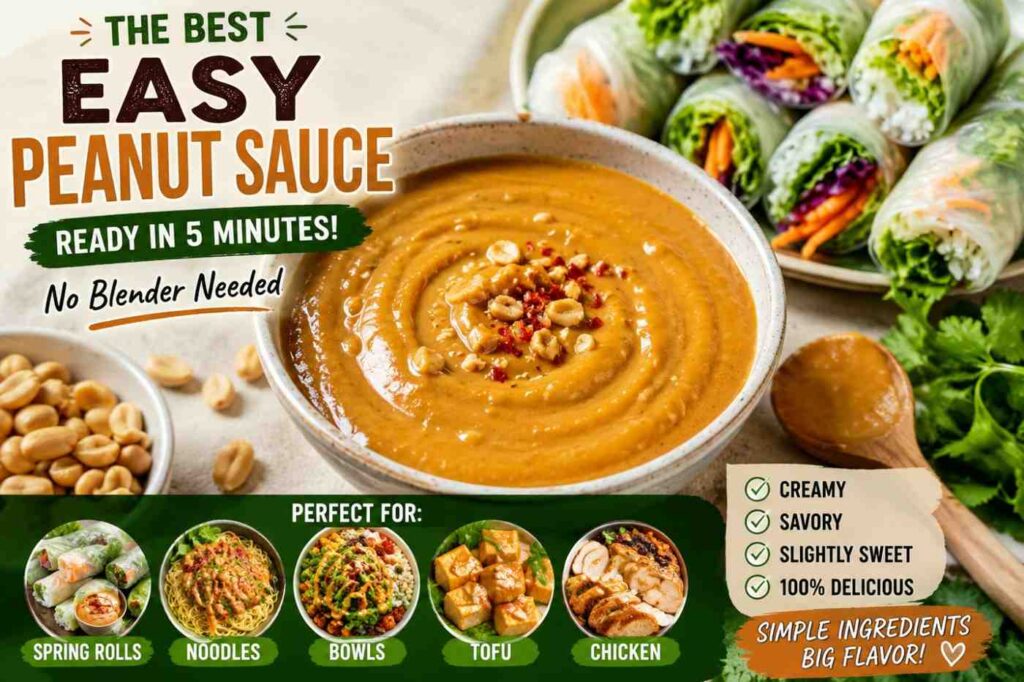
Peanut sauce is a versatile, savory, slightly sweet sauce made by whisking together creamy peanut butter, soy sauce, rice vinegar, and a sweetener. A five-minute, no-cook recipe created in the kitchen of Lona’s Lil Eats, St. Louis, MO, for home cooks who want a dipping sauce that is pantry-stable and doesn’t require a blender or special equipment.
This recipe hits the spot when you need a high-protein, flavorful way to top a fresh spring roll or for a quick weeknight meal that’s just as delicious as it would be at a restaurant. At Lona’s Lil Eats, we feel that a good taste should not be a time-consuming process. It’s about the harmony between salty, sour, and sweet flavours that make great Southeast Asian-inspired sauces, but done in a way that anyone can make in minutes.
What You Need: Ingredients for the Best Easy Peanut Sauce
This easy peanut sauce recipe with peanut butter you can find in the pantry only requires five main ingredients and a few optional aromatics to add a little more heat.
Creamy Peanut Butter: This is the rich, fatty component of the sauce. Natural peanut butter is good for a roasted peanut taste, but regular peanut butter such as Jif or Skippy will be smoother and less prone to separating.
Wheat Gluten: This is to thicken the sauce.Sea Salt: This is to add the necessary saltiness. If you are looking for a peanut sauce recipe without soy sauce, you can substitute this with coconut aminos.
Rice Vinegar: The acidity of rice vinegar adds a brightening quality to the overall flavor of the peanut butter.
Sweetener (Honey or Maple syrup): A little sweetness helps to add balance to the salt and acid. A vegan version is an excellent choice of maple syrup.
Warm Water: This is the key to getting the right drizzling consistency without the need for any additional oils and fats.
Addition: For extra spice, serve with a teaspoon of sriracha, chili garlic sauce or a pinch of red pepper flakes.
Natural or Regular peanut butter: which to use?
Often we are asked at Lona’s Lil Eats in St. Louis what is the best peanut butter that we can use when creating peanut sauce. The natural peanut butter that requires stirring has a more intense “real” peanut flavor, but may be grittier. Regular “no stir” peanut butter has stabilizers that help the peanut butter keep a creamy, emulsified texture longer, particularly if it is stored in the refrigerator for meal prep.
How To Make Peanut Sauce Step By Step
No-cook and 1 bowl: You don’t need a blender or food processor to get a velvety texture.
To soften Base: Place ½ cup peanut butter in a medium mixing bowl. Add 10–15 seconds to the time if the peanut butter is cool from the pantry or is hard when you open the container. This small move will make whisking much easier.
Mix the liquids together: transfer 2 tablespoons of soy sauce, 1 tablespoon of rice vinegar and 1 tablespoon of the sweetener of your choice to the bowl.
First Whisk: Whisk with a balloon whisk or fork the ingredients. Initially, it might appear that it is ‘seizing’ or that it has become a thick, clumpy paste. This is normal.
Mix with warm water: Mix with warm water, 1 tablespoon at a time, whisking thoroughly after each addition. Add more water until you get your desired consistency: thicker for dipping spring rolls or thinner for drizzling over a glass noodle bowl like a Lona’s.
Taste and Adjust: Taste the sauce. Add a sprinkle of soy sauce if it requires additional seasoning. If it is still too heavy, increase the amount of vinegar by a small amount.
Sauces and condiments are a great way to add variety to your dishes, so it is helpful to know how to make them yourself.
Peanut Sauce Ingredient Swap: How to alternate professionally
Soyless peanut sauce.
For those with a soy allergy or just simply out of soy use coconut aminos instead as a 1:1 substitute. A little sweeter than soy sauce, you might want to decrease the amount of added honey or maple syrup. For those who require a peanut sauce that is gluten-free, it is best to go with Tamari.
Peanut Sauce Recipe No Coconut Milk
Peanut butter is used in many traditional Thai dishes in combination with coconut milk. Though tasty, it increases the prep time and calories. This is a “no coconut milk” version – here, warm water will make for a lighter, cleaner profile and allow the peanut and vinegar flavors to pop.
Nut-Free “Peanut” Sauce Recipe
If you are a nut allergy sufferer, you can make a similar texture and savor with SunButter (sunflower seed butter) or Tahini (sesame seed paste). Keep in mind that tahini is a bit more bitter than peanut butter so you might want to add a bit more sweetener to counteract the taste.
No Fish Sauce?
Some recipes call for fish sauce to add a bit of salty flavor; however, this simple recipe does not have fish sauce to make it a vegetarian and vegan option. No need to miss out on the fish sauce, as there is plenty of the other, soy sauce.
Shabu Shabu Peanut Sauce: Creamy Dip for Hot Pot and Beyond
Shabu shabu peanut sauce, or goma dare, is a popular ingredient in Japanese hot pot dishes, so if you’ve eaten shabu shabu before, you probably have a taste for goma dare as well. In contrast to the Thai peanut sauce, the texture is lighter, creamier and is centred around the nutty flavour of sesame, sometimes with a little peanut butter to enhance. It is a harmonious blend of savory soy sauce, tangy rice vinegar and a subtle hint of sweetness that produces a smooth dipping sauce which enhances thinly sliced beef, pork, seafood, tofu and fresh vegetables without overpowering them.
The best part? This requires no special equipment, not a lot of hard-to-find ingredients. In just a few minutes and a few common staples in the kitchen, you can concoct a restaurant-style sauce that’s equally tasty when served in a hot pot, as well as when you toss it on top of noodles, grilled chicken, rice bowls or fresh spring rolls.
For a more intense flavor, add in a bit more peanut butter. If you’re looking for a lighter, more traditional Japanese flavour, then let toasted sesame really stand out. Regardless, it’s a simple sauce that’s incredibly versatile and can be customized to fit your favorite foods and spice preferences.
Troubleshooting: Why Does My Peanut Sauce Separate or Clump?
Even the simplest recipes can cause problems with texture. Below are the professional techniques of Lona’s Lil Eats to correct some of the common peanut sauce issues.
How can I thin out my peanut sauce?
Peanut butter absorbs a lot of fluids and is high in fat and protein. If sauce is so thick that it won’t pour, add warm water, a teaspoon at a time, and whisk until smooth. As the peanut butter warms up, the fats relax and the liquid is absorbed into the butter.
What to do when peanut sauce becomes separated?
If made from natural peanut butter, oils may separate from the solids, particularly when stored in the refrigerator. To remedy this, don’t throw it out. Warm the oils in the microwave for 5-10 seconds, then vigorously mix. If it is still broken, a small amount of very hot water and whisking should bring the emulsion back together.
How can I make my sauce smooth?
When you’re whisking it by hand and you still see little bits of peanut butter, you probably had peanut butter that was too cold. The next time you make peanut butter cookies, be sure to use peanut butter that’s at room temperature or just a little warmed. If there are any remaining bits, a small hand frother or the jar-and-shake method can be used to break them up immediately.
Peanut Sauce vs. Satay Sauce: What is the Difference?
A common question among all the searchers is “Is peanut sauce the same as satay sauce?” While they are closely related, there are distinct differences. Satay sauce (bumbu kacang) is a special sauce for satay (skewered and barbecued meat). It is often based on more sophisticated aromatics, such as lemongrass, galangal and shallots and is often cooked with coconut milk.
Peanut sauce, as used in this easy recipe, is a general term for the condiment that is used to dip in spring rolls, pour over salads (such as Gado-Gado) and for noodle bowls. While satay sauce is a type of peanut sauce, not all peanut sauces are satay sauces. This recipe takes 5 minutes and only uses ingredients from a typical Southeast Asian kitchen, but with a few tweaks to make it more efficient for the home kitchen.
Ways to Use This Easy Peanut Sauce
This sauce is not a dipper sauce; it is a power sauce. We’ve noticed similar flavors in a lot of different items at Lona’s Lil Eats in St. Louis.
The classic use case: Spring Roll Dip. Complimentary with rice paper rolls stuffed with shrimp, tofu, and fresh herbs. Warm the glass noodles or chill the soba noodles, and toss with this sauce for a quick meal.
Grain Bowls: Add a protein (like brown rice or quinoa), steamed broccoli and a drizzle of your choice.
Thin Down: Add more rice vinegar and water to a salad dressing, making it creamy like a Thai-inspired salad dressing.
Chicken or Tofu Marinade: Dip the skewers in the thick version, or bake the tofu, then marinate.
Storage, Meal Prep and Freezing.
How long does homemade peanut sauce last in the fridge?
This sauce will keep for up to 7 days in the refrigerator in an airtight container or glass mason jar. It is very stable as it is free of dairy and fresh aromatics such as raw garlic (unless added by the cook).
Can you freeze peanut sauce?
Yes, you can freeze peanut sauce. Yes, peanut sauces can be frozen for up to 3 months. Note, though, that the oils tend to separate during freezing. Follow these steps when you’re ready to use: thaw it in the refrigerator overnight. It will need to be heated slowly and whisked thoroughly (with a teaspoon of warm water if needed to get the creamy texture back).
Craving It Without the Whisking? Visit Lona’s Lil Eats
Looking to try these flavors without washing a single dish? Stop by Lona’s Lil Eats in St. Louis. Our specialty is fresh, soul-warming cuisine with the bold, spicy, and savory flavors of the Silk Road. Whether you’re looking for a quick lunch in Fox Park or need catering for your next office event, Lona’s Lil Eats provides the best rice paper wraps and noodle bowls in St. Louis.
FAQ’s
Q1. What if you don’t have a blender to make peanut sauce?
Ans: Yes, this recipe is a blender-free recipe! Warm water and hand whisking can result in a smooth consistency in less than 5 minutes.
Q2. Which peanut butter is the best?
Ans: It is best to use the commercially available creamy peanut butter, if you can, that doesn’t require stirring. A natural variety will give a more rustic flavor; just be sure to whisk more to avoid separation.
Q3. Does peanut sauce need to be cooked?
Ans: This particular recipe is a “no cook” recipe. Some traditional sauces are reduced to meld flavors, but it is perfectly safe to use a whisk-together, since all of the ingredients are shelf-stable and can be eaten as is.
Q4. What can I do to spice my peanut sauce?
Ans: Heat can be added easily by adding some sriracha or Sambal Oelek. To add a more mild smoky heat, add a pinch of crushed red pepper flakes.
Q5. Does this recipe contain any ingredients that are not vegan?
Ans: Yes, as long as you use maple syrup or agave as your sweetener instead of honey, this easy peanut sauce recipe is 100% vegan and plant-based.