
Pop-up chef Pao Thampitak budgets 350 to 400 grams of food per guest for a family-style dinner, which is roughly 12 to 14 ounces, according to America’s Test Kitchen’s guide to buying party food. That single number is the best place to start, because a shared table fails in one of two ways: too little food or too many dishes nobody planned for.
These family style dining ideas cover the quantity, the mix of dishes, and the food safety rules that keep platters safe while they travel around the table.
How much food a family style dinner needs
Good family style dining ideas start with quantity. Plan on about 350 to 400 grams of total food per guest, mains and sides together. That’s one chef’s ballpark for family-style dinners, and it’s meant to make sure nobody leaves hungry. The same article doesn’t split it between mains and sides, so treat it as a total and divide it however your menu needs.
For a starter course, private chef Andrew Iacono suggests budgeting two to three items per guest. He also says running out of hors d’oeuvres is a good way to get people to sit down at the table for the rest of the meal.
Family style has a quiet bonus. Because guests pass dishes and serve themselves, America’s Test Kitchen says it reduces waste and makes leftovers easy to save. People take what they’ll actually eat, and the rest goes straight into containers.
Six family style dining ideas for a shared table menu
A shared table menu isn’t a random pile of dishes. It’s a set of roles, each one doing a different job, and six of them cover almost any group.
1. Pick one showpiece to build around
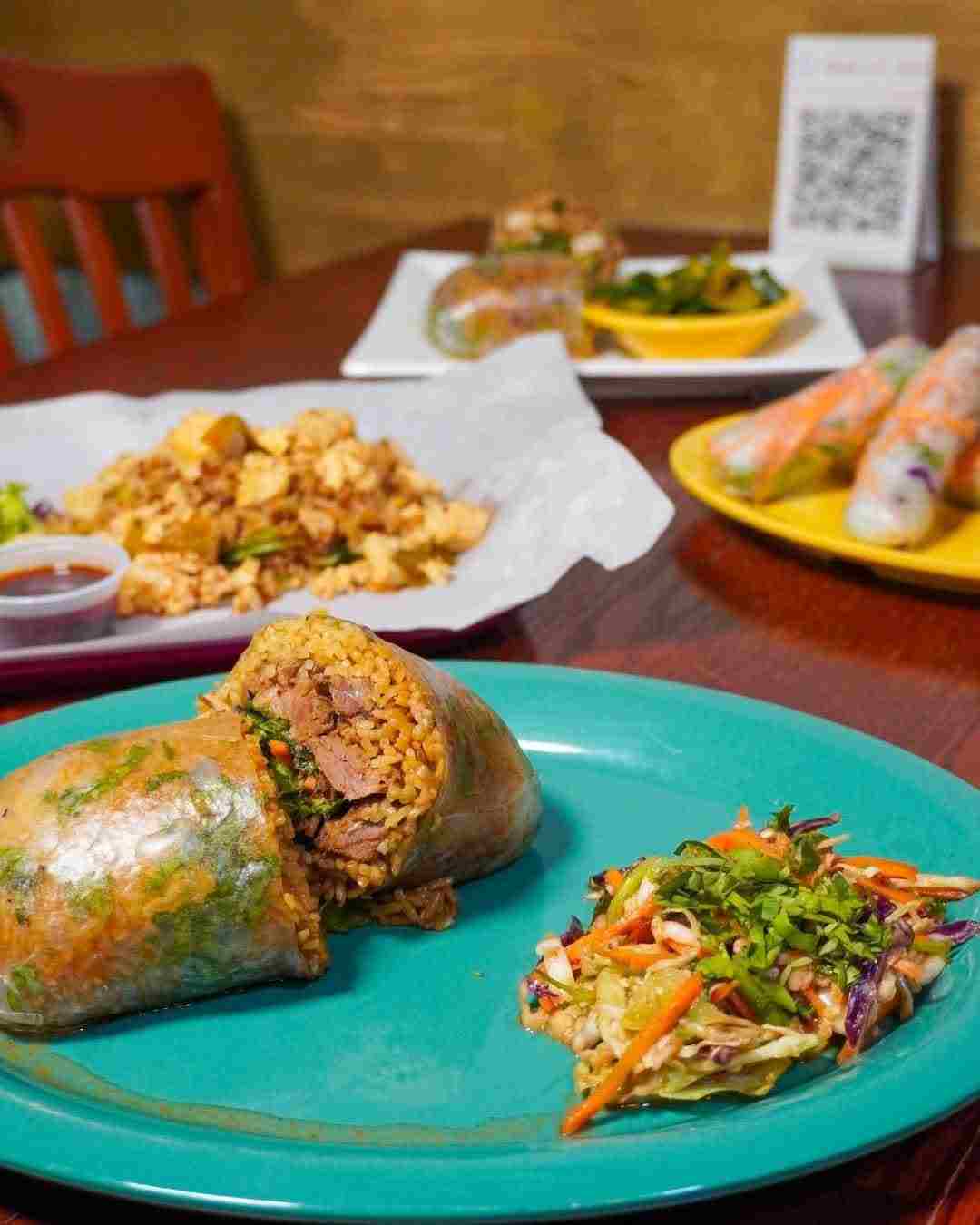
Every table needs a centerpiece that makes people lean in. At Lona’s LiL Eats it’s the Giant Rice Paper Wrap, the dish we’re known for, and a single big item like that gives the rest of the menu something to orbit.
Choose yours first, then fill in around it. If the showpiece is rich, the supporting dishes should be lighter. If it’s mild, they can carry more punch.
2. Pair every rich dish with something fresh
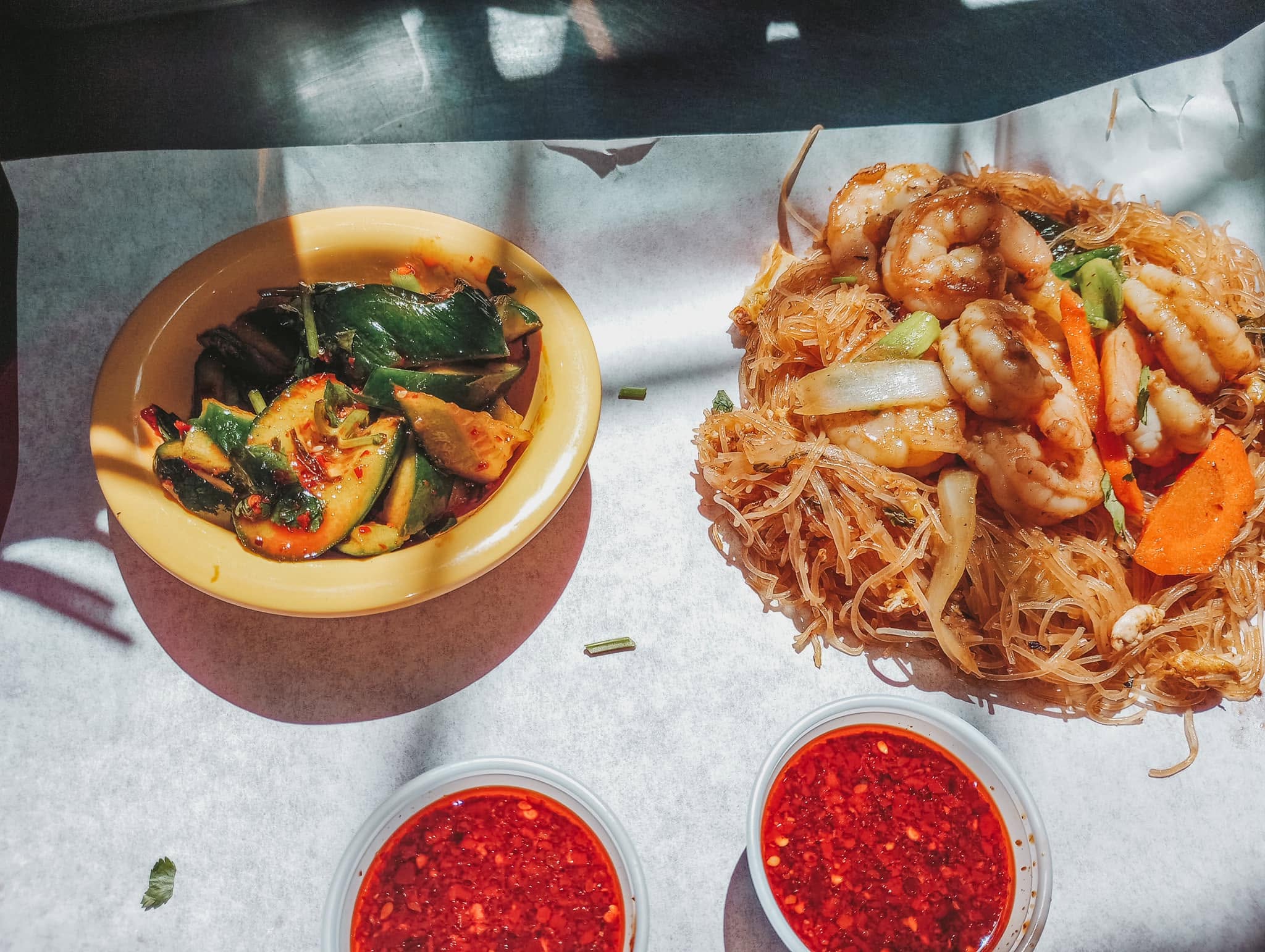
Crunchy, cold and sharp dishes make the heavy ones taste better. A bowl of raw vegetables or a tangy slaw sitting next to something fried or saucy means guests keep reaching for seconds instead of tapping out after three bites.
Of all the family style dining ideas here, this one is the cheapest to pull off, since a fresh dish holds up well on the table. Cold items are the easiest to keep safe, as the temperature table below shows.
3. Give the table a neutral base
Rice or noodles go in the middle so every strong flavor has somewhere to land. A shared table menu without a base forces guests to eat each dish on its own, and that gets overwhelming fast.
4. Put the sauces on the table, not on the food
Sauce is how one platter becomes six different bites. We make all our seasonings and sauces from scratch, from peeling the garlic to roasting the peanuts, and we’ve learned that a small bowl of something sharp or spicy does more for a shared meal than another main dish.
Plain proteins with two or three sauces beat three pre-sauced proteins that all taste the same. It also lets guests who want less heat skip it without making a fuss.
5. Plan one dish for the youngest and the pickiest
Pick something mild and familiar for kids and cautious eaters, and set it where small hands can reach. Family meals tend to widen what kids will try: Action for Healthy Kids says children who eat with their family are exposed to a wider variety of foods and become less picky.
That only works if the table has something they’ll actually eat on day one. Mild rice and a plain protein do the job.
6. Make sure a vegetarian can fill a plate
One vegetable-forward main, not just a side salad, means a guest who skips meat isn’t picking around the edges. Our vegetarian options are a good example of how a meatless dish can sit at the center of a shared meal rather than at the margin.
Keeping a shared table safe
Hot food should stay at 140 °F or warmer, cold food at 40 °F or colder, and nothing should sit out for more than two hours. Those are the rules from the Partnership for Food Safety Education’s page on brilliant buffets and party platters, written for buffets but just as relevant when platters circulate at a table.
| Situation | Rule |
|---|---|
| Hot dishes on the table | Hold at 140 °F or warmer |
| Cold dishes on the table | Hold at 40 °F or colder |
| Time out at room temperature | No more than two hours, then discard |
| Backup platters waiting in the oven | About 200 to 250 °F |
| Reheating leftovers | 165 °F |
The same source recommends serving on several small platters instead of one large one. You can prepare extra platters ahead, then refrigerate them or keep them hot in the oven until the first ones run low.
For family style dining ideas that survive a long dinner, that means bringing out half of each dish and holding the rest back. The table stays fuller-looking, the food stays at the right temperature, and the last helpings are as good as the first.
Why family style dining ideas are worth the effort

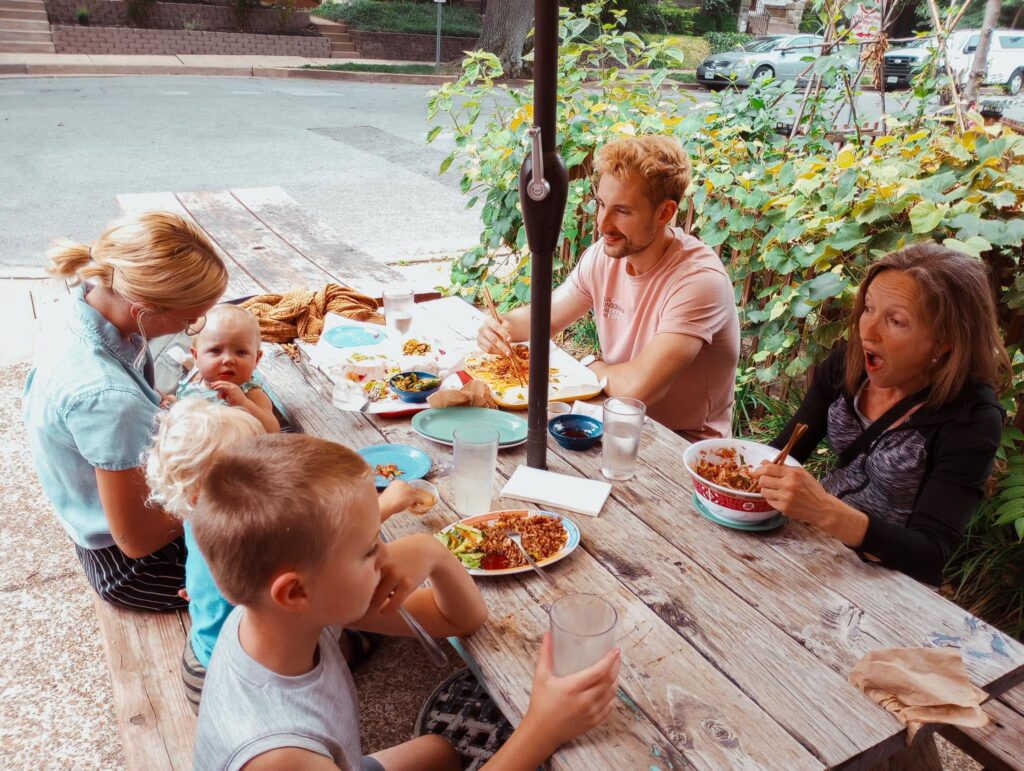
Eating from shared dishes slows a meal down, and slower meals have knock-on effects. Action for Healthy Kids says people eat more slowly and talk more at family meals, which gives more time for digestion and helps prevent overeating.
The same page says family meals tend to be more balanced, with the recommended servings of fruits and vegetables. It also says kids and teens who eat family meals may earn higher grades and are less likely to engage in high-risk behaviors, though the page cites no studies for these points, so read them as the organization’s summary rather than hard proof.
The practical advice there is sensible. Share the prep, table-setting and cleanup among everyone, let people choose their own seats, and keep screens in another room.
When you’d rather not cook the whole table yourself
A shared table for eight is a lot of chopping. If you’d rather spend the evening at the table than at the stove, our catering menu and St. Louis catering page are built for exactly this kind of group meal.
We’ve been at it since 2008, when Lona’s LiL Eats started as a single gas-grill stand at Soulard Farmers Market. The Soulard stand is still open every Saturday lunch, and our shop is in Fox Park. Everything is made with freshly chopped ingredients and absolutely no MSG.
For more family style dining ideas on ordering for a crowd, our guide to what to order at an Asian restaurant when you’re feeding a group walks through the same logic of mixing dishes.
Frequently asked questions
Is family style the same as a buffet?
No. In family style, guests sit at the table and pass dishes around, serving themselves as they go. A buffet has people line up and fill plates at a separate table.
Do I need more food for a family style dinner?
Plan on about 350 to 400 grams of total food per guest, which is one chef’s estimate quoted by America’s Test Kitchen. Because guests take only what they want, leftovers are easy to save.
How long can dishes stay on the table?
No more than two hours at room temperature. Keep hot food at 140 °F or warmer and cold food at 40 °F or colder if it needs to sit longer.
How do I get kids to eat from shared dishes?
Include at least one mild, familiar dish and put it within their reach. Action for Healthy Kids says children who eat with their families are exposed to more foods and become less picky over time.
Sources
- How to Buy Food for Your Party (But Not Too Much) — America’s Test Kitchen
- Brilliant Buffets and Party Platters — Partnership for Food Safety Education
- The Benefits of Eating Meals as a Family — Action for Healthy Kids