
Pour oil that’s too hot over chili flakes and the whole batch turns bitter. Get the temperature right and a cup of homemade chili oil takes about 20 minutes. This chili oil uses and recipe guide walks through the method, the storage rules, and ten dishes that earn a drizzle.
What goes into a good chili oil
Any homemade chili oil starts with chili flakes, aromatics and a neutral oil. The flakes carry the flavor, so they’re where to spend your attention.
Fly By Jing’s guide recommends a neutral oil such as grapeseed or canola. Korean gochugaru works well too, and it’s what the author of the NoRecipes chili oil uses.
For aromatics, garlic, ginger, star anise and Sichuan peppercorns are the usual cast. At our shop, the seasonings and sauces are made from scratch, from peeling the garlic to roasting the peanuts, and there’s absolutely no MSG. A jar of chili oil is a small version of that same habit.
A chili oil recipe you can make in 20 minutes
This version follows Huy Vu’s chili oil, published on Hungry Huy in January 2025, which makes about one cup. The recipe lists MSG as optional. Leave it out; the oil doesn’t need it.
You’ll need these ingredients:
- 4 tablespoons Sichuan pepper flakes, plus 1/2 teaspoon five-spice powder, 1 teaspoon kosher salt, 1 teaspoon sugar and 1 tablespoon toasted sesame seeds
- 1 cup vegetable oil
- 2 tablespoons Sichuan peppercorns, 4 star anise, 1 cinnamon stick and 1 bay leaf
- 8 smashed garlic cloves and 1 inch of sliced ginger
Then work through it in order:
- Mix the flakes, five-spice, salt and sugar in a heat-safe glass container. Hold the sesame seeds back.
- Put the oil and the aromatics in a cold saucepan and heat over medium-high to a low simmer.
- Keep the oil between 250 and 275°F until the garlic turns golden brown, about 10 to 15 minutes.
- Turn off the heat and strain out the aromatics.
- Ladle in about a quarter cup of oil and stir, then keep adding it gradually so the spices don’t seize.
- Stir in the sesame seeds and let it cool to room temperature.
It sizzles hard when the oil meets the flakes. Use a deep, heat-safe container and a long spoon.
A second method: crisp garlic and gochugaru
The NoRecipes version works differently, and it’s the one to try if you want a chunkier, more savory jar. It uses 30 grams of gochugaru, 15 grams of sesame seeds, 1/8 teaspoon of five-spice and a spoonful of soy sauce, with 1 cup of oil.
Instead of infusing whole aromatics, you fry 30 grams of minced garlic and 15 grams of minced ginger in the oil until golden and crisp, without burning them. Then you pour the whole pan over the spice mixture and stir until the sizzling stops.
The author also adds 15 grams of dried scallops for umami, and suggests dried shiitake powder at about half the weight as a plant-based swap. It yields roughly 1.5 cups, so it’s a bigger batch than the first recipe.
Both methods share one rule. Hot oil goes over the flakes, never flakes into the pan.
Pick the infused version for a straight-up oil, and the fried-aromatics version when you want crisp garlic in every spoonful. Every chili oil uses and recipe choice here is easy to adjust to the spice level you like.
Chili oil uses and recipe rules that save a batch
Temperature comes first. The Hungry Huy recipe warns that oil hotter than 275°F can scorch the spices and make the chili oil bitter.
Fly By Jing aims lower, at about 225°F, when small bubbles form, and says a burning smell means the oil is too hot. Err on the cool side, and use a thermometer if you own one.
Flakes burn easily, which is why the hot oil goes over them instead of the flakes going into the pan. NoRecipes also says to discard the hard black seeds from Sichuan pepper, since they’re gritty.
For a deeper flavor, let it steep for a day or two before bottling, as NoRecipes suggests.
How long it keeps
Refrigerate it in an airtight container. Hungry Huy says to use it within one week and notes that the FDA recommends using flavored oils made with fresh ingredients like garlic within three days, so the shorter window is the safer one.
Make a cup, use it up, and make another. That beats a giant jar that sits for a month.
Ten chili oil uses and recipe pairings to try first
Chili oil goes on nearly anything you’d reach for hot sauce to finish. Here are ten that hold up.
1. Dan dan noodles
The classic. The sauce for dan dan noodles combines sesame paste, soy sauce, Sichuan peppercorn, chili oil and garlic, tossed with noodles, greens, peanuts and scallions.
2. Mapo tofu
Chili oil goes into the pot with the tofu, garlic, ginger and bean paste, and the dish is served over rice. Fly By Jing notes it’s easy to make vegan.
3. Biang biang noodles
Add it at the end of thick homemade noodles. The oil brings extra heat and brings out the other flavors.
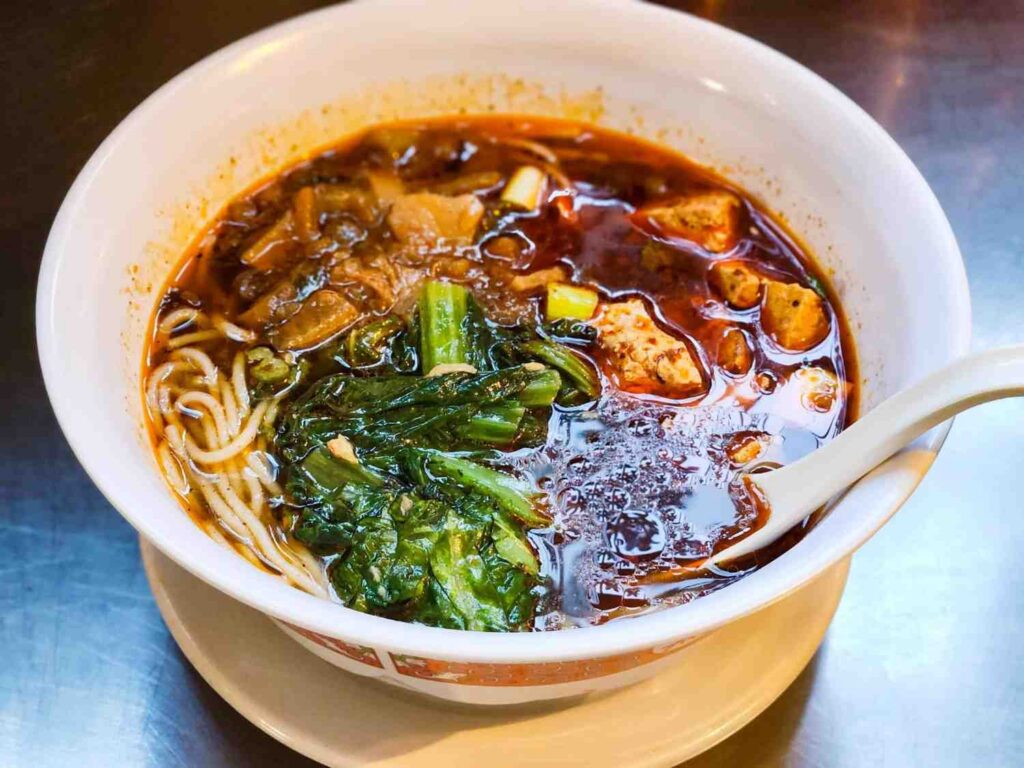
4. Noodle soup
A spoonful on a bowl of noodle soup is the lowest-effort upgrade on the list. The NoRecipes author also spoons the leftover dregs from the jar into the broth.
5. Scrambled eggs
NoRecipes lists eggs among its uses. Drizzle it over the plate instead of into the pan.
6. Plain rice
Steamed rice with a spoonful of chili oil is a meal when the fridge is nearly empty.
7. Stir-fries
NoRecipes also drizzles it over stir-fries. Add it off the heat so the flakes stay toasty instead of scorched.
8. Hash browns
Another NoRecipes pairing, and an easy one to try on a weekend morning.
9. Dumplings, potstickers and dim sum
Hungry Huy points to potstickers, shumai, steamed bao buns and char siu bao as good partners.
10. Hot pot dipping sauce
Hungry Huy also suggests it as a hot pot dipping sauce.
Whatever you pick, a sweet counterpoint helps. Fly By Jing pairs chili oil with zhong sauce, a sweet and spicy mix of brown sugar, soy sauce and mushrooms that balances the heat. That’s worth knowing before you serve a very hot batch to a mixed table.
The easiest way to use up a jar is the plain way: put it on the side of any meal and let everyone add their own. Those ten chili oil uses and recipe ideas will empty a cup in a week.
If you like a bright, funky topping next to the heat, our guide to eating kimchi beyond the side dish pairs well with a drizzle. And if you’re building a rice bowl, our grain bowl formula leaves room for a spoonful at the end.
Skip the saucepan and eat it at the table
Not every night calls for a thermometer. Our menu is full of fresh, made-from-scratch Asian food, and our Saturday lunch stand at Soulard Farmers Market began in 2008 as a single gas grill. You can read more about who we are and how the shop in Fox Park came along.
Frequently asked questions
Can I use gochugaru in a chili oil recipe instead of Sichuan flakes?
Yes. The NoRecipes recipe uses Korean gochugaru, and its author warns that chili flakes burn easily and turn bitter, so pour the hot oil over them instead of frying them.
How hot should the oil be when you make chili oil?
Hungry Huy keeps it between 250 and 275°F and warns that anything hotter can scorch the spices. Fly By Jing heats to about 225°F, until small bubbles form.
How long does homemade chili oil last in the fridge?
Hungry Huy says to use it within a week and keep it in the fridge, and notes the FDA’s three-day guidance for flavored oils made with fresh garlic. NoRecipes adds that frying the aromatics until crisp extends shelf life.
Does it need to steep?
It tastes better if it does. NoRecipes suggests a day or two before bottling.
Sources
- Chili Oil Recipe — Hungry Huy
- Best uses of chili oil — Fly By Jing
- Spicy Sichuan Chili Oil — NoRecipes