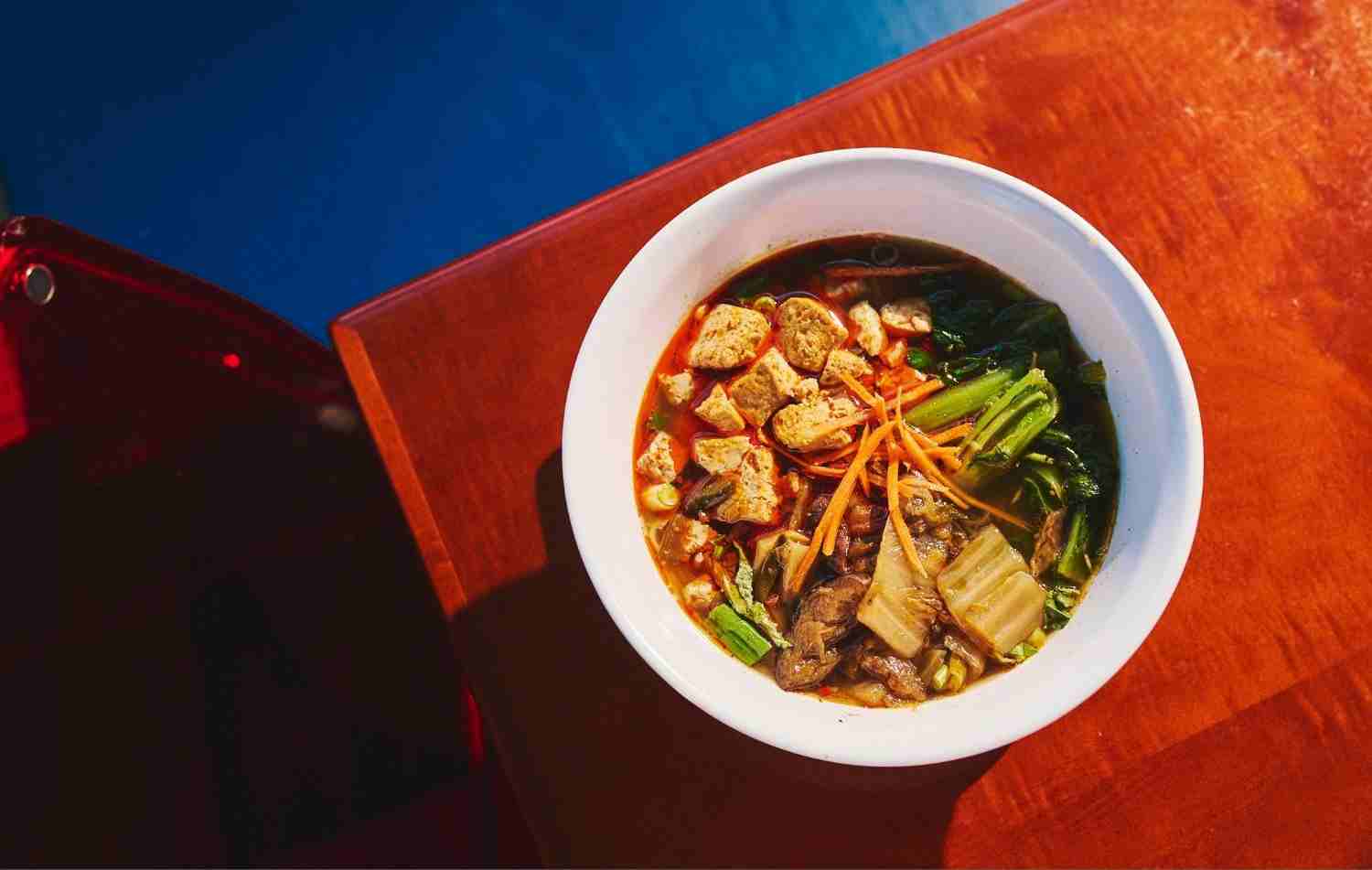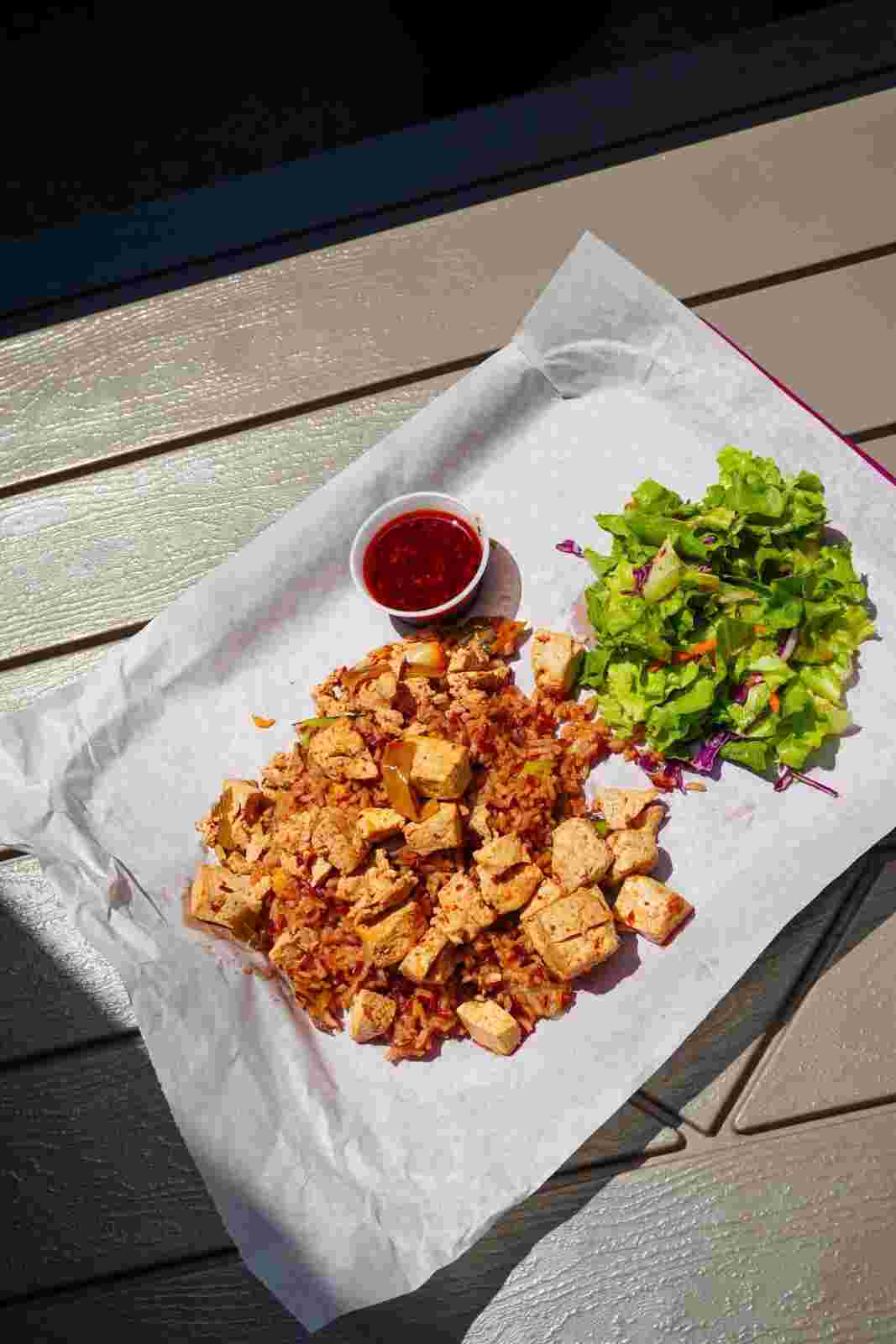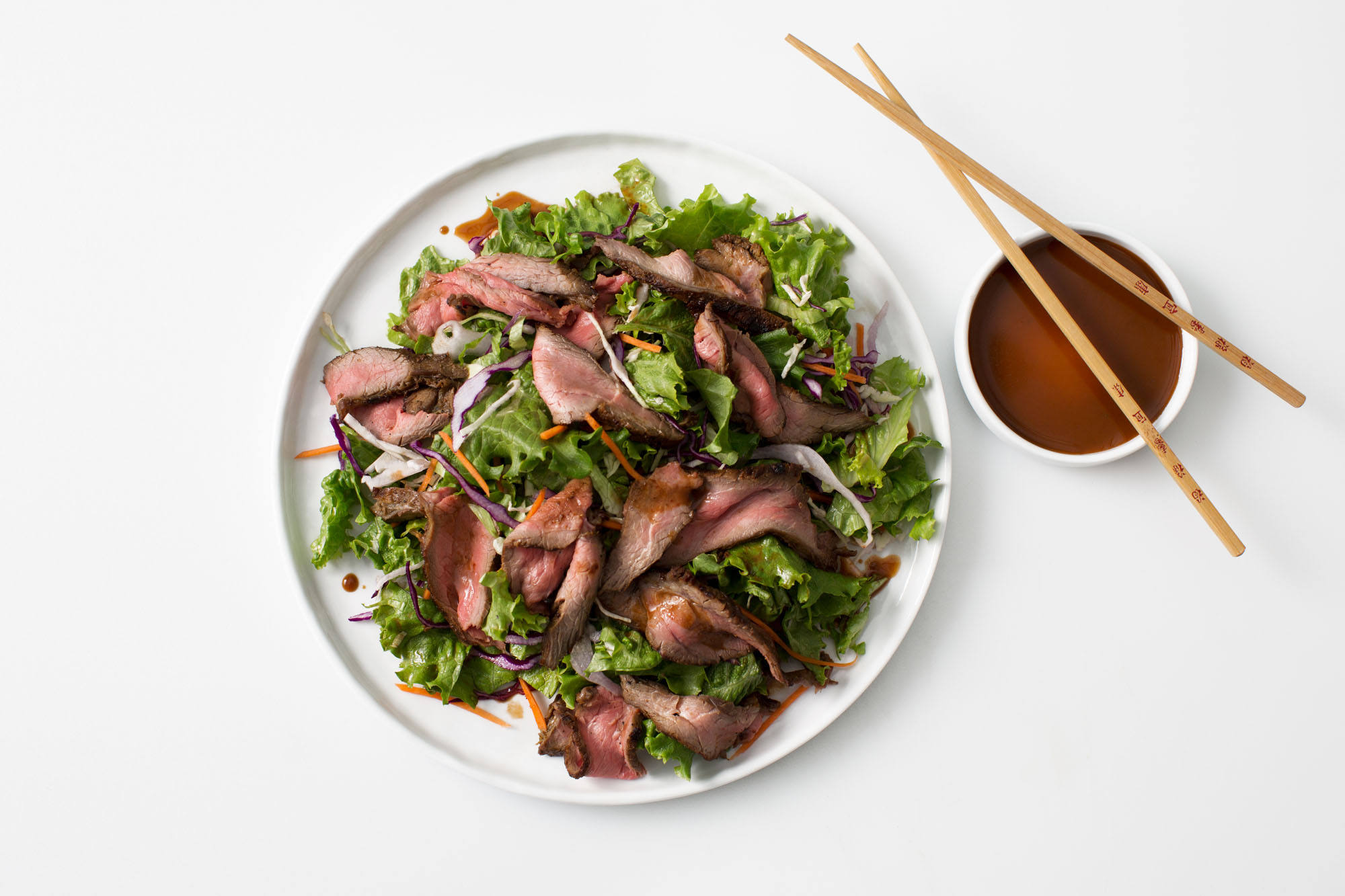

If you’re interested in an easy, good homemade stir-fry sauce recipe that does not require you to purchase a whole bunch of specialty bottles, here is a quick recipe: blend soy sauce, a sweetener, acid, garlic, ginger, and a cornstarch slurry.
Pour over hot vegetables and protein in the final minute of stir-frying. This is the secret to all restaurant-style stir-fry sauces, and it takes less than five minutes using readily available ingredients.
This article explains how to make your very own stir-fry sauce, why it is better than the bottled version, and provides you with five simple recipes for stir-fry sauce. There is something for everyone – even the vegan and the gluten-intolerant among us!
What Is Stir Fry Sauce Made Of?
The stir-fry sauce is a quick-cooking sauce made from a few pantry ingredients that have the right combination of salty, sweet, sour, and savory tastes and is also made a little bit thick to stick onto everything that you put in your pan. Almost all stir-fry sauces, regardless of cuisine, are made up of six basic ingredient categories.
| Ingredient Category | Common Examples | What It Does |
| Salty base | Soy sauce, tamari, oyster sauce, fish sauce | Adds umami and the main savory backbone |
| Sweetener | Brown sugar, honey, maple syrup | Balances the salt and adds glossy caramelization |
| Acid | Rice vinegar, lime juice, rice wine | Brightens the sauce and cuts richness |
| Aromatics | Garlic, fresh ginger, scallions, chili | Builds depth and a little heat |
| Thickener | Cornstarch or arrowroot mixed with cold water | Turns thin liquid into a sauce that coats food |
| Fat | Sesame oil, neutral cooking oil | Carries flavor and adds a finishing shine |
If you grasp the six roles mentioned above, there is nothing that can stop you from coming up with numerous combinations and ending up with an effective list of stir fry sauce ingredients.
Why Make Your Own Homemade Stir Fry Sauce Recipes?
It may seem obvious that bottled stir-fry sauces have their conveniences, but there is also another side to it that could easily pass unnoticed until reading the product label.
First of all, consider its sodium content. One tablespoon of regular soy sauce contains up to 900 mg of sodium, according to USDA FoodData Central database, and most bottled stir-fry sauces contain it as one of the main ingredients together with salt.
The daily intake of sodium suggested by the FDA for adults does not exceed 2,300 mg, while the CDC states that the average daily consumption for Americans exceeds 3,300 mg. When making your own sauce, you decide yourself what amount of salt should be used, and you may benefit from using low-sodium soy sauce as well as fresh aromatics and acid to give it a strong taste without adding any unnecessary sodium.
Besides, there is also a question of what else could be in the sauce. Many commercially available sauces have added preservatives, thickening agents, and corn syrup to prolong their shelf life, while a homemade one does not contain any of those ingredients.
| Factor | Store-Bought Sauce | Homemade Stir Fry Sauce |
| Sodium control | Fixed by the manufacturer | Fully adjustable |
| Preservatives | Often present | None unless added |
| Cost per batch | Higher per ounce | Lower using pantry staples |
| Flavor customization | Limited to what’s on the label | Fully customizable heat, sweetness, and acid |
| Time to make | None, ready to pour | About 5 minutes |
| Dietary flexibility | Hard to adjust for allergies | Easy to make gluten-free, vegan, or low-sugar |
When it comes to a restaurant making everything from scratch using its own sauces, this is also precisely the reason why house-made stir-fry sauces taste differently from any other bottled sauce.
For you to get a taste of it, our healthy takeout guide talks about how we create stir-fried food based on the use of homemade sauces.
How Do You Make Homemade Stir Fry Sauce? The Basic Formula
With the six ingredients identified above, the process of making the sauce will basically be all about getting the right proportions. Below is a basic formula that can be applied to just about any stir-fry sauce recipe.
| Ingredient | Amount | Role |
| Soy sauce or tamari | 1/4 cup | Salty base and umami |
| Brown sugar or honey | 2 tablespoons | Sweetness and balance |
| Rice vinegar | 2 tablespoons | Acid and brightness |
| Garlic, minced | 2 cloves | Aromatic depth |
| Ginger, minced | 1 tablespoon | Warmth and a little bite |
| Cornstarch | 1 tablespoon | Thickener (mixed with 2 tablespoons cold water first) |
| Broth or water | 1/2 cup | Thins the sauce to a pourable consistency |
| Sesame oil | 1 teaspoon | Finishing flavor, added last |
To make this mixture, you will have to combine the soy sauce, the sweetener, vinegar, garlic, and ginger in a bowl. In a smaller dish, you will blend cornstarch with cold water. This mixture is referred to as a slurry and serves the purpose of preventing lumps.
Your wok or skillet should be heated with oil that has a high smoke point, because stir-frying requires a very hot temperature.
In accordance with the American Heart Association, unsaturated vegetable oils such as canola oil, peanut oil, avocado oil, and refined sesame oil are more beneficial for one’s cardiovascular health than saturated fats.
Furthermore, these types of oil can tolerate high temperatures during the process of cooking. First, you should cook your protein and vegetables, then pour the sauce into the pan and add the slurry to it. Bring it to a boil for 30-60 seconds.
Tip: Always add the cornstarch slurry towards the end of cooking, off the heat if possible, and stir continuously. Cornstarch acts quickly to thicken, and if left on the high heat, your sauce may turn gluey rather than glossy.
However, speed is only one benefit. Studies carried out on the effects of stir-frying Brassica vegetables and published by the National Institutes of Health have shown that stir-frying these vegetables retains their nutrients better than cooking them in boiled water since there is no soaking in water. This is just another reason why this cooking process, which is an ancient Chinese cooking technique, has been used for generations.
Types of Stir Fry Sauce (and When to Use Each One)
Not every stir fry requires the same stir fry sauce recipe either. Here are the types of sauces to consider, along with the differences among them.
Soy Sauce Stir Fry Sauce Recipe (The Classic)
It is the basic recipe mentioned above and the most universal type of stir-fry sauce. It goes well with chicken, beef, shrimp, tofu, or even with a regular vegetable stir fry. Besides, it is the best option to start with if you have no experience in making your own sauce.
Asian Stir Fry Sauce Recipe Easy Version (Garlic Ginger)
Forgo almost all sugar content and focus on garlic and ginger in order to create your savory stir fry sauce. Just mix 3 tablespoons soy sauce, 1 tablespoon rice vinegar, 3 cloves of minced garlic, 2 tablespoons of minced ginger, and some broth.
You can prepare it in less than 5 minutes, and it perfectly matches the mixed vegetables. This is the most convenient recipe for the stir fry sauce if you do not want to go shopping.
Sweet and Spicy Stir Fry Sauce
Mix 1 or 2 teaspoons of chili garlic sauce or sriracha with the basic recipe mixture, together with another tablespoon of honey. Goes well with chicken or shrimp dishes.
Peanut Sesame Sauce
Mix 3 tablespoons of peanut butter into the basic recipe, as well as another tablespoon of rice vinegar and a little bit of red pepper flakes. The result is a vegan-friendly recipe that goes extremely well with rice or glass noodles because the starch of the noodles absorbs the rich flavor of the sauce.
For more information about what glass noodles are and how they work in cooking, read our guide about glass noodles.
The sauce also perfectly complements a vegan stir-fry with tofu and vegetables.
Teriyaki Sauce
Boost the sugar content to 3 tablespoons along with adding 1 tablespoon of mirin or even some pineapple juice for a thicker and sweeter sauce. This is definitely more of a glaze rather than a sauce and needs an additional minute of reduction in the pan.
5 Easy Homemade Stir Fry Sauce Recipes You Can Make Tonight
The following is a list of five stir-fry sauces, easy enough to make even on a hectic weeknight, using the same basic sauce recipe below. These basic stir fry sauces require the same six simple ingredients found in your pantry, thus once you have made one, the other four can be made quickly and easily. They all include the same cornstarch slurry method from the basic recipe below.
- Basic Garlic-Soy Sauce: Soy sauce, brown sugar, rice vinegar, garlic, ginger, and cornstarch slurry. This is the basic stir fry sauce that most home cooks turn to first when preparing their stir-fry dishes. The simple choice, the basic recipe. Perfect with chicken, beef, or vegetables.
- Sweet Chili Sauce: Base sauce, chili garlic paste, and another spoon of honey. Goes best with shrimp or fried tofu.
- Peanut Sesame Sauce: Base sauce, peanut butter, more vinegar, and red pepper flakes. Goes well with noodles, tofu, or a vegetable-based meal.
- Honey Ginger Sauce: Base sauce with twice the ginger and honey replacing the brown sugar. Goes well with chicken or salmon.
- Teriyaki-Style Sauce: Base sauce with more sugar and a splash of either mirin or pineapple juice. Goes best with beef or pork.
As is evident from the recipes, all of these sauces maintain the same pattern of ingredients, making their preparation equally quick.
Best Stir Fry Sauce Recipe: Our Go-To
If you are going to make only one sauce over and over again, it will be the classic garlic-soy sauce. This sauce covers all the flavor bases without being one-sided, and that is the reason why it pairs nicely with any meat or vegetables.
Another great thing about this sauce is that it freezes well in small portions; thus, doubling the recipe and freezing half of it can save you time on making the sauce another day.
What Sauce to Use With Stir Fry: Matching Sauce to Protein and Vegetables
Certain sauces naturally pair better with certain ingredients. Use this as a starting guide.
| Main Ingredient | Recommended Sauce | Why It Works |
| Chicken | Classic garlic-soy or honey ginger | Mild protein takes on flavor easily |
| Beef | Teriyaki-style or garlic-soy | Richer sauce stands up to the meat |
| Shrimp | Sweet chili or garlic-soy | Quick-cooking protein pairs with bright, fast sauces |
| Tofu | Peanut sesame or garlic-soy | Absorbs sauce well, needs bold flavor |
| Mixed vegetables | Garlic ginger (asian stir fry sauce easy version) | Lets vegetable flavors come through |
| Noodles (glass or rice) | Peanut sesame | Thicker sauce clings to noodles |
Common Mistakes to Avoid When Making Stir Fry Sauce
These are the mistakes that make most homemade stir-fry sauces disappointing:
- Adding the sauce too soon. The sauce should be added when the protein and vegetables are nearly cooked, or else the sugar burns before the sauce reduces.
- Omitting the cornstarch mixture. Sprinkling cornstarch into a hot pan results in lumps. It is better to mix it with cold water beforehand.
- Using only soy sauce without adding any acidic components or sweetener. Without acid and sugar, the sauce will taste salty. Only the combination of these elements makes it a stir-fry sauce.
- Adding too many ingredients. If there is too much food in the pan, its temperature becomes too low for the sauce to coat everything.
- Tasting the sauce after cooking. Since there are different brands of soy sauce and different vegetables, it is better to taste the sauce before adding it to the plate.
How to Store and Meal Prep Stir Fry Sauce
Preparing stir-fry sauce beforehand is among the most straightforward things to do to have a homemade and quick dinner. The raw stir-fry sauce, excluding the cornstarch mixture, can stay in the fridge for a week inside an airtight container. Adding the cornstarch mixture each time separately is better because it cannot last when prepared together.
Stir-fry sauce can be prepared ahead of time for a more extended period by doubling or tripling the recipe and freezing it in cubes or small jars for about 3 months. It should thaw at room temperature the night before use. Making ahead sauces goes hand-in-hand with preparing make-ahead bases. For a lighter dinner base, here is a guide on making cauliflower rice.
Conclusion:
It is definitely worthwhile when you know how to do it yourself in order to make homemade stir-fry sauce recipes, but sometimes it is good for someone else to do the stirring in the wok for a change.
Our sauces at Lona’s Lil Eats have been prepared from scratch, just like in this recipe book, using fresh garlic and ginger, and not from a bottle. Check out our menu.
FAQs
Q1. Does homemade stir fry sauce contain gluten?
Ans: This depends on whether you substitute the regular soy sauce with tamari or gluten-free soy sauce. Cornstarch, garlic, ginger, vinegar, and honey are naturally gluten-free.
Q2. Is it possible to make the sauce ahead of time?
Ans: Yes, it is. You need only to prepare everything except the cornstarch slurry and then keep it in the refrigerator for up to one week.
Q3. What is the easiest way to make stir-fry sauce?
Ans: The easiest way is the traditional garlic-soy stir-fry sauce. It includes common ingredients that everyone can find in their kitchen.
Q4. What is the easiest way to make a stir-fry sauce that doesn’t use cornstarch?
Ans: Cooking the stir-fry sauce a little longer will reduce the sauce and create a thickening effect, but it won’t be as shiny as a cornstarch-based stir-fry sauce.
Q5. What is the difference between stir-fry sauce and teriyaki sauce?
Ans: Teriyaki sauce is a sweeter and thicker variety of stir-fry sauce. Generally speaking, a stir-fry sauce is a bit more savory than a teriyaki sauce, which is generally reduced further to become a glaze.
Q6. How long can a homemade stir-fry sauce stay fresh in the fridge?
Ans: About a week for the sauce itself. Once the stir-fry sauce is cooked, it should be consumed within 3-4 days.