
By the kitchen at Lona’s Lil Eats, 2199 California Ave., St. Louis, MO | Last updated: August 2026
The best spicy eggplant recipe sears thick batons of Chinese or Japanese eggplant in a hot pan until the edges are deep golden, then finishes them in a garlic-chili-soy sauce that thickens and clings in the final 60 seconds. Total time is 25 minutes. Almost every failed version of this dish fails for one of three reasons: the eggplant was cut too thin, the pan was not hot enough, or the sauce went in before the eggplant was actually cooked.
This page covers the recipe itself, the reason eggplant behaves so strangely in a pan, how to build a spicy sauce from ratios instead of a fixed list, four cooking methods compared, and the regional variations worth knowing. If you only want the recipe, jump to the master recipe below. If you have made spicy eggplant before and it came out greasy or mushy, the section on why eggplant absorbs oil is the one that will actually fix it.
Quick recipe facts
| Detail | Spec |
| Prep time | 10 minutes |
| Cook time | 15 minutes |
| Total time | 25 minutes |
| Yield | 4 as a side, 2 as a main over rice |
| Heat level | Medium, fully adjustable |
| Diet | Vegan, dairy-free, easily gluten-free |
| Best eggplant | Chinese or Japanese |
| Equipment | Wok or 12-inch skillet |
| Make ahead | Keeps 3 to 4 days, flavor improves overnight |
Why eggplant absorbs so much oil, and how to stop it
Eggplant flesh is structurally closer to a sponge than to most vegetables. Its interior is threaded with air pockets, and when it hits warm oil those pockets pull the oil straight in by capillary action. This is why a half cup of oil can vanish into a pan of eggplant in under a minute and why so many home versions come out heavy.
The useful part is what happens next. As eggplant continues cooking, the cell walls collapse and the air pockets close, and much of the absorbed oil is pushed back out into the pan. Eggplant that looks like an oil disaster at minute two often releases that oil by minute six. Undercooked eggplant is greasy eggplant. This is the single most counterintuitive thing about cooking it, and it explains why the fix for oily eggplant is usually to cook it longer and hotter rather than to add less oil.
Three habits control the outcome:
- Preheat properly. Oil should shimmer and move freely before anything goes in. A hot surface sets the exterior fast, so less oil migrates inward during the vulnerable first 60 seconds.
- Cut thick. Fewer cut surfaces per bite means less absorption. Thin slices have enormous surface area and drink oil relentlessly.
- Cook it all the way through. Pull it when the centers are creamy and yield easily to a spoon, not when they still have resistance.
Which eggplant should you use?
Variety changes the finished texture more than any other decision in this recipe. Long, thin Asian varieties have thinner skin, fewer seeds, and less of the spongy interior that causes trouble.
| Variety | Skin and seeds | Texture cooked | Verdict for this recipe |
| Chinese eggplant | Thin light purple skin, few seeds | Silky, creamy, holds shape | Best choice |
| Japanese eggplant | Thin dark purple skin, few seeds | Very tender, slightly softer | Excellent |
| Graffiti or Fairy Tale | Medium skin, moderate seeds | Creamy, mild, sweet | Good substitute |
| Italian eggplant | Thicker skin, more seeds | Spongier, absorbs more oil | Workable, peel in stripes |
| Globe eggplant | Thick skin, many seeds | Needs longer cooking, can go bitter | Last resort, peel fully |
| Thai eggplant | Firm, very seedy, round | Stays crunchy | Wrong texture, use in curry |
If globe eggplant is all your store carries, peel it, cut the batons slightly thicker, salt for a full 20 minutes instead of 10, and add an extra tablespoon of oil to the pan.
Should you salt eggplant first?
Salt for 10 minutes, but not for the reason most recipes give. The traditional argument is that salting removes bitterness. Modern eggplant cultivars have been bred for decades toward lower bitterness, so unless you have an older globe eggplant or one that has sat too long, bitterness is rarely the issue.
Salting still earns its place because it draws surface moisture out through osmosis and partially collapses those air pockets before the eggplant ever reaches the pan. Drier surfaces sear instead of steam, and pre-collapsed pockets absorb noticeably less oil. Pat the pieces genuinely dry afterward. Wet eggplant in hot oil spits and steams, and steamed eggplant never browns.
Skip salting only if you are roasting rather than pan-searing, since dry oven heat handles surface moisture on its own.
The sauce: build it from a ratio, not a list
Once you understand the structure, you can build a spicy eggplant sauce from whatever is in your kitchen. Every good version balances six roles.
| Role | What it does | Options | Amount for this recipe |
| Salt and umami | Backbone of the sauce | Soy sauce, tamari, coconut aminos, doubanjiang | 3 tablespoons |
| Acid | Keeps heat bright, cuts richness | Rice vinegar, black vinegar, lime juice | 1 tablespoon |
| Sweet | Rounds the chili, aids browning | Brown sugar, maple syrup, honey | 1 tablespoon |
| Heat | The actual spice | Chili garlic sauce, sambal, doubanjiang, chili oil | 2 to 3 teaspoons |
| Aromatic | Depth and fragrance | Garlic, ginger, scallion whites | 6 cloves plus 1 tablespoon ginger |
| Body | Makes it cling instead of pool | Cornstarch slurry, potato starch | 2 teaspoons in 1/3 cup liquid |
Get those six in balance and the dish works. A sauce that tastes flat almost always needs acid, not more salt. A sauce that tastes harshly hot needs sugar, not less chili.
Which chili paste to use
| Chili paste | Flavor profile | Heat | Adjust the recipe by |
| Chili garlic sauce | Bright, garlicky, slightly sour | Medium | Nothing, this is the default |
| Sambal oelek | Clean, pure chili, no garlic | Medium to hot | Add one extra clove of garlic |
| Doubanjiang | Fermented, deeply savory, salty | Mild to medium | Cut soy sauce to 2 tablespoons |
| Gochujang | Sweet, thick, fermented | Mild | Cut sugar to 1 teaspoon |
| Fresh Thai chilies | Sharp, floral, immediate | Hot | Bloom in oil before the garlic |
| Chili crisp | Nutty, crunchy, aromatic | Mild to medium | Add at the end, off the heat |
Master recipe: spicy garlic eggplant
Ingredients
Eggplant
- 1.5 lbs Chinese or Japanese eggplant, about 3 medium
- 3 tablespoons neutral oil such as peanut, avocado, or grapeseed
- 1 teaspoon kosher salt
Sauce
- 6 cloves garlic, minced
- 1 tablespoon fresh ginger, minced
- 2 to 3 teaspoons chili garlic sauce
- 3 tablespoons soy sauce or tamari
- 1 tablespoon rice vinegar
- 1 tablespoon brown sugar
- 1 teaspoon toasted sesame oil
- 1/3 cup water or unsalted vegetable stock
- 2 teaspoons cornstarch
Finish
- 3 scallions, sliced thin
- 1 tablespoon toasted sesame seeds
- Fresh cilantro or Thai basil, torn
Method
- Cut into thick batons. Trim the ends, halve each eggplant lengthwise, then cut each half into pieces roughly 3 inches long and 1 inch thick. Aim for uniform thickness so everything finishes at the same moment. Do not cut into rounds or thin planks.
- Salt and rest 10 minutes. Toss with 1 teaspoon kosher salt in a colander. Beads of moisture should appear on the surface. Pat completely dry with a clean towel, pressing gently. Dry surfaces are non-negotiable for browning.
- Whisk the sauce cold. Combine soy sauce, rice vinegar, brown sugar, chili garlic sauce, sesame oil, water, and cornstarch until smooth. Cornstarch only dissolves properly in cold liquid, so this must happen off the heat. Keep the minced garlic and ginger in a separate small bowl.
- Heat the pan until the oil shimmers. Add 3 tablespoons oil to a wok or 12-inch skillet over medium-high. Wait for visible movement in the oil. Rushing this step is the most common cause of greasy eggplant.
- Sear undisturbed, in batches. Lay the eggplant in a single layer, cut side down, and leave it alone for 3 to 4 minutes. Resist stirring. Flip and cook another 3 to 4 minutes. The edges should be deep golden brown and the centers should collapse under gentle pressure from a spoon. If your pan cannot hold everything in one layer, cook in two batches. Crowding drops the pan temperature and turns searing into steaming.
- Bloom the aromatics for 30 seconds. Push the eggplant to one side, add garlic and ginger to the bare surface, and stir constantly until fragrant. Garlic goes from fragrant to acrid in about 20 seconds at this temperature, so watch it and move on the moment you can smell it.
- Add the sauce and thicken. Re-whisk the sauce, since cornstarch settles within minutes, then pour it around the edge of the pan. Toss continuously for 60 to 90 seconds. The sauce will go cloudy, then glossy, then start clinging to each piece instead of pooling underneath. That gloss is your signal to stop.
- Finish off the heat. Kill the flame, add scallions, sesame seeds, and herbs, and toss once. Serve immediately.
Four cooking methods compared
The searing method above gives the best texture, but it is not the only route. Here is how the alternatives stack up.
| Method | Oil used | Time | Texture | Best when |
| Pan sear | 3 tablespoons | 15 min | Browned edges, creamy center | You want the best version |
| Oven roast | 1.5 tablespoons | 25 min | Concentrated, slightly chewy | Cooking for a crowd, less oil |
| Steam then sear | 1 tablespoon | 18 min | Very silky, less browning | Lowest oil, classic Sichuan approach |
| Air fryer | 1 tablespoon | 18 min | Firmer, drier edges | Small batches, minimal cleanup |
For the roast method, cut the batons, toss with oil, and roast at 425°F for 20 to 25 minutes, then transfer to a pan and add the sauce for the final minute. For steam then sear, steam the batons for 8 minutes until translucent, dry them well, then sear briefly in a hot pan before saucing. The steam method uses the least oil of any approach and produces the silkiest result, at the cost of browning.
Troubleshooting
| Problem | Cause | Fix |
| Greasy and heavy | Undercooked, or pan was too cool | Cook longer and hotter, oil releases back out |
| Mushy, falling apart | Cut too thin or overcooked after saucing | Cut 1 inch thick, sauce for 90 seconds max |
| Pale, no browning | Wet surfaces or crowded pan | Dry thoroughly, cook in two batches |
| Bitter aftertaste | Burnt garlic, or old globe eggplant | Add garlic later, buy firm glossy eggplant |
| Sauce is watery | Cornstarch settled, or not enough time | Re-whisk before pouring, cook until glossy |
| Sauce too salty | Doubanjiang plus full soy sauce | Cut soy to 2 tablespoons when using doubanjiang |
| Tastes flat | Missing acid | Add a teaspoon of vinegar or squeeze of lime |
| Harsh, one-note heat | Missing sweetness | Add sugar, not less chili |
Regional variations worth knowing
Yuxiang qiezi (Sichuan fish-fragrant eggplant). Named for a seasoning profile traditionally used with fish, containing no fish itself. Built on doubanjiang, pickled chilies, black vinegar, sugar, garlic, and ginger, it leans sour and sweet against the heat. Cut the soy sauce and add a tablespoon of Chinkiang black vinegar.
Thai basil eggplant (pad makhua yao). Finished with a generous handful of holy or Thai basil off the heat, plus fresh chilies and a touch of sweetness. Traditionally uses fish sauce, so use light soy or a vegan fish sauce substitute to keep it plant-based.
Di san xian (three treasures of the earth). A northeastern Chinese dish combining eggplant with potato and green pepper in a savory garlic sauce. Less spicy by default, deeply satisfying, and a good template if you want to stretch one eggplant across more people.
Gaji namul (Korean steamed eggplant). Steamed rather than seared, then dressed with sesame oil, garlic, soy, and gochugaru. Served cool or at room temperature, which makes it a strong summer option.
Storage, scaling, and meal prep
- Refrigerate in an airtight container for 3 to 4 days. The flavor genuinely improves overnight as the sauce penetrates.
- Reheat in a hot dry pan for 2 minutes rather than a microwave, which softens the texture further.
- Do not freeze. Eggplant cells rupture on thawing and the result is watery and structureless.
- Scaling up requires more batches, not a bigger pile in the same pan. Two pounds of eggplant needs three rounds of searing in a 12-inch skillet. Alternatively, switch to the roast method, which scales across sheet pans without any loss.
- Prep ahead by mixing the sauce up to 3 days in advance and storing it refrigerated. Re-whisk before use. Do not cut the eggplant ahead, since the flesh oxidizes and browns within about 30 minutes.
Nutrition context
Eggplant is a light base carrying a heavy-flavored sauce. According to USDA FoodData Central, one cup of raw cubed eggplant contains roughly 20 calories and about 2.5 grams of dietary fiber. That means the oil and the sweetener, not the vegetable, account for most of the finished dish’s calorie load. The steam-then-sear method cuts the oil by roughly two thirds if that matters to you.
The deep purple skin contains nasunin, an anthocyanin pigment, which is one more reason to leave thin-skinned Asian varieties unpeeled.
Diet swaps
- Gluten-free: Use tamari or coconut aminos in place of soy sauce and confirm your chili paste is certified gluten-free. Doubanjiang commonly contains wheat.
- Vegan: The recipe as written is fully vegan. Watch for restaurant and recipe versions that include oyster sauce, fish sauce, or shrimp paste.
- Lower sodium: Low-sodium tamari, unsalted stock, and a quick rinse of the salted eggplant before drying.
- Higher protein: Fold in stir-fried tofu, tempeh, or edamame during the final two minutes.
- Lower sugar: Drop the sweetener to 1 teaspoon and finish with a squeeze of lime.
- Paleo: Coconut aminos instead of soy, arrowroot instead of cornstarch, skip the sugar.
What to serve it with
- Jasmine rice or stir-fried whole grain rice to catch the sauce
- Cold glass noodles for a lighter warm-weather version
- Steamed noodles tossed directly into the pan at the end
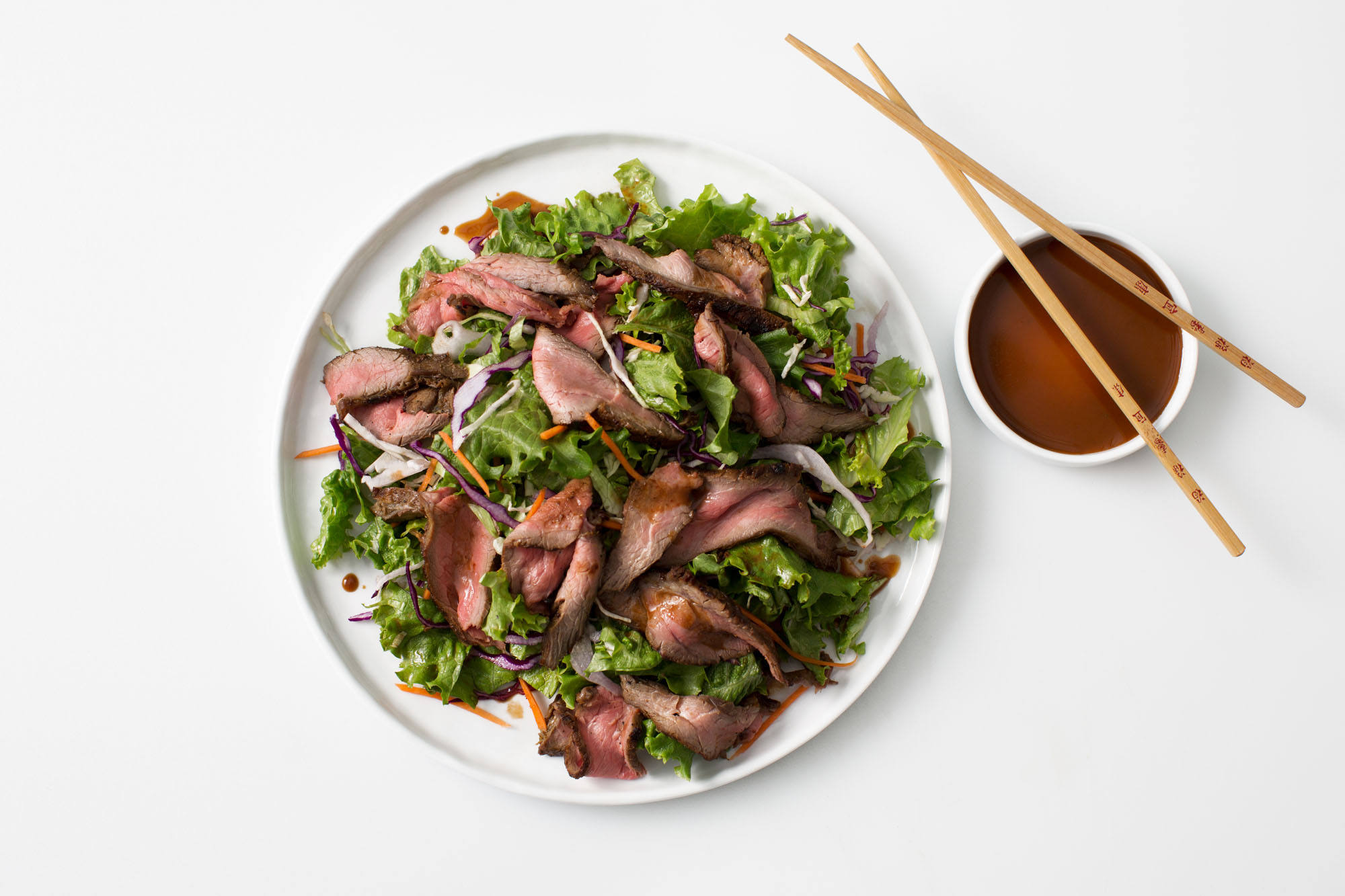
- A raw lettuce mix if you want it to eat like a warm salad
- Rolled into a large rice paper wrap with rice, herbs, and a peanut or sesame sauce
That last one is how we would eat it. The whole point of a wrap format is that a vegetable cooked this way, seared hard and glazed in a scratch sauce, holds its own without needing meat next to it.
If you would rather someone else did the pan work
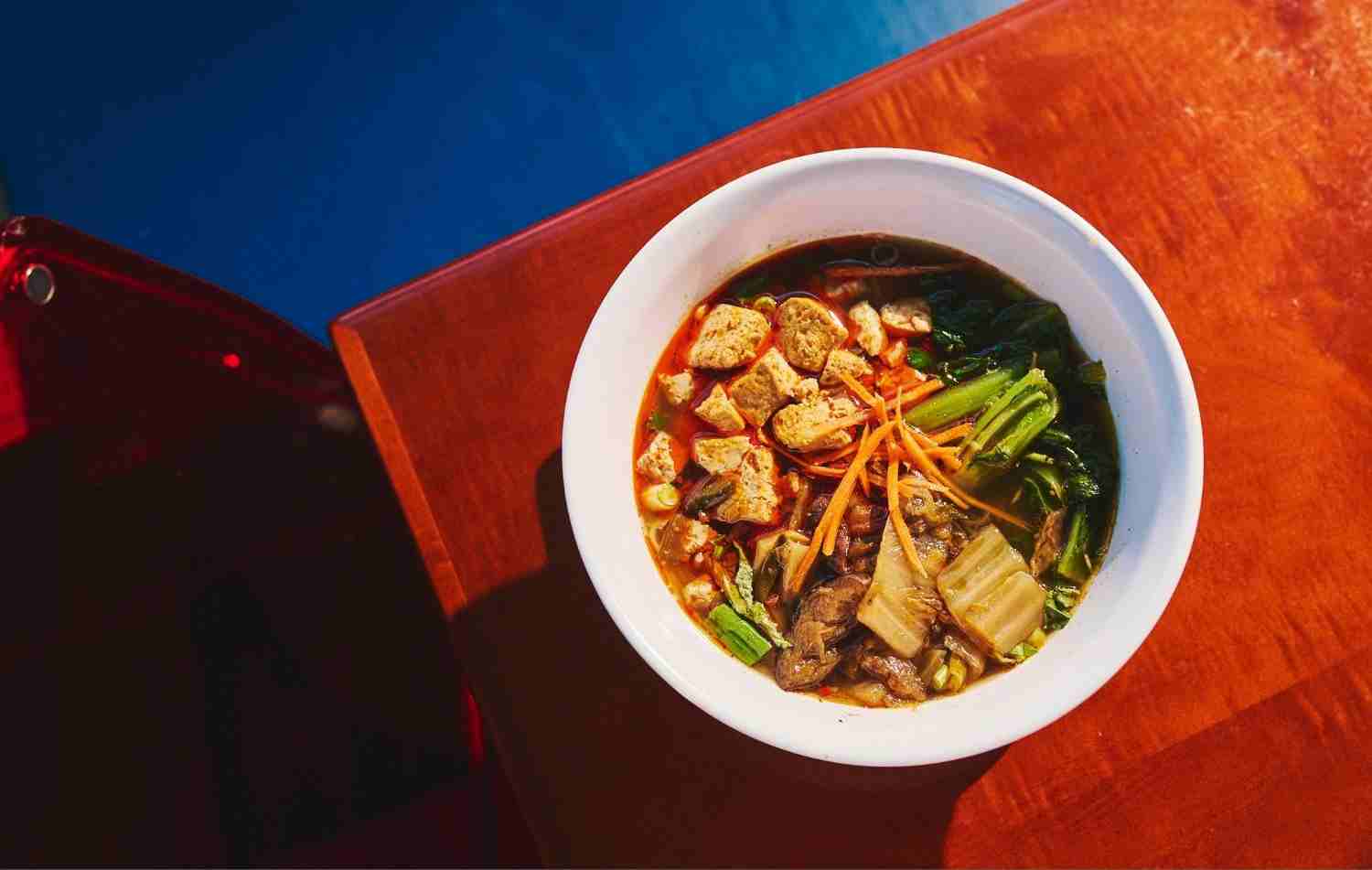
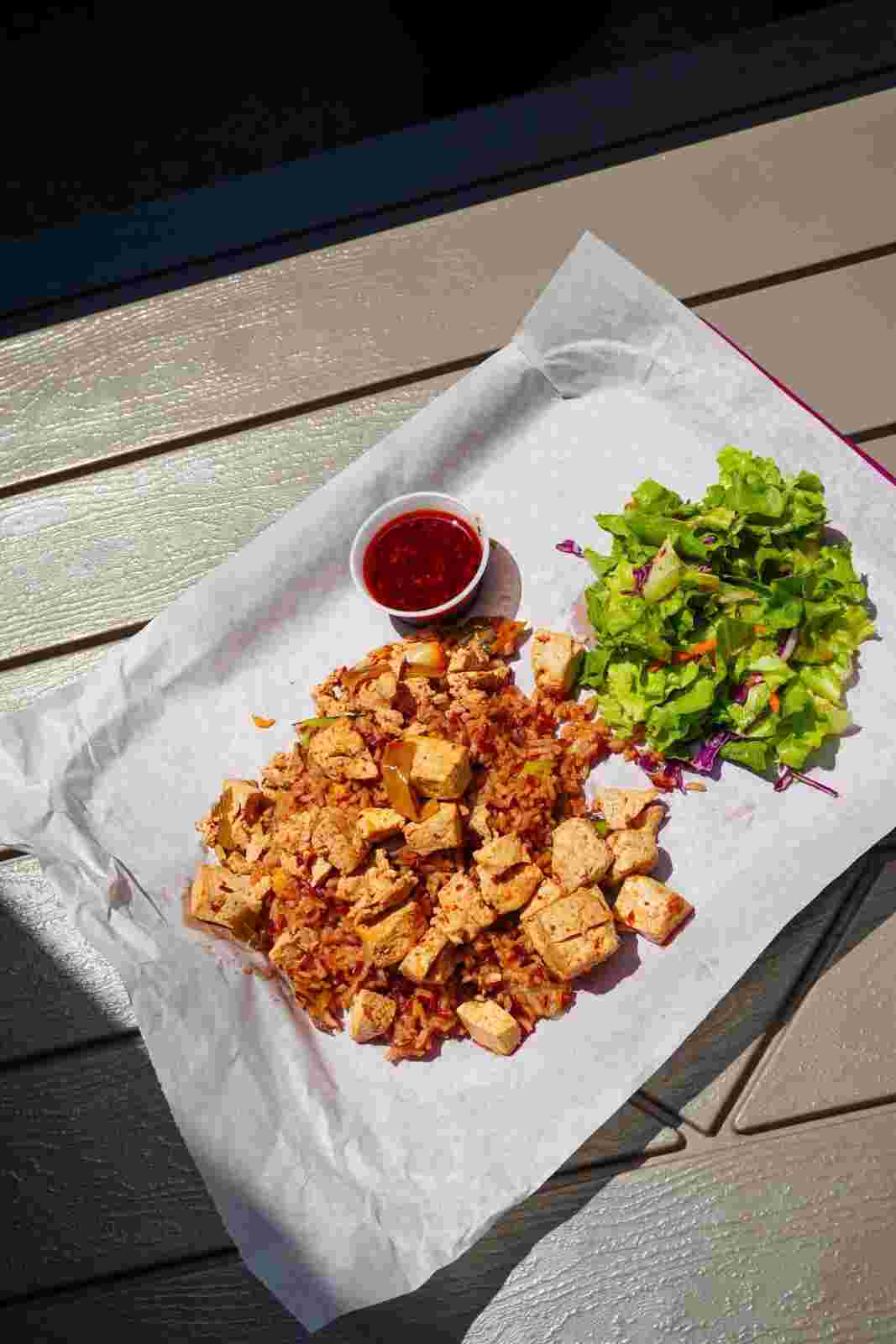
The 25 minutes above is not long, but it is 25 attentive minutes at a hot pan. Lona’s Lil Eats is built on the same logic this recipe runs on. Our Create Ur Own menu asks you to pick a protein, then a staple such as jasmine rice, stir-fried whole grain rice, steamed noodles, or a raw lettuce mix, then a sauce and a side. The result comes wrapped in our Giant Rice Paper Wrap, in a flour tortilla, or spread out on a plate.
Our sesame and lime-ginger-peanut sauces sit in similar territory to the sauce in this recipe, and Lona-Q brings the same sweet-against-heat balance the ratio table above is chasing. Every seasoning and sauce is made from scratch, starting from peeling the garlic and roasting the peanuts, with no MSG at any point.
Roughly 80 percent of our menu is vegan, and every category on the menu has a vegan option, from spring rolls and hand-rolled dumplings through proteins and sauces. We price vegan proteins by our actual cost rather than charging a premium for them. Gluten-free, paleo, and diabetic-friendly choices run through every step too.
We are at 2199 California Ave. in the Fox Park neighborhood of St. Louis, MO 63104, open Tuesday through Saturday, 11:00 am to 9:00 pm. The original stand at Soulard Farmers Market still runs Saturday lunch. Feeding a group? We handle catering across St. Louis for small and large parties.
Frequently asked questions
Do you have to peel eggplant for a spicy stir fry?
No, and you should not peel Chinese or Japanese eggplant. Their skin is thin enough to disappear in the finished dish and it holds each piece together while the interior turns creamy. Only peel thick-skinned Italian or globe eggplant, and peeling those in stripes preserves some structure while removing the toughest sections.
Should you salt eggplant before cooking it?
Salt for 10 minutes, primarily to draw out surface moisture rather than bitterness. Modern eggplant cultivars are bred to be far less bitter than older varieties, so the real benefit is that drier, partly collapsed flesh sears properly and absorbs less oil. Pat the pieces thoroughly dry afterward.
Why did my spicy eggplant turn out greasy?
Greasy eggplant is almost always undercooked eggplant. The air pockets in eggplant flesh absorb oil rapidly at first, then release much of it back into the pan as the cell walls collapse with continued cooking. Pulling it too early traps that oil inside. Cook until the centers are fully creamy and yield easily.
Why did my eggplant turn to mush?
Mush comes from pieces cut too thin, or from leaving the eggplant in the sauce too long after it was already cooked through. Cut batons at least 1 inch thick and limit the saucing stage to 60 to 90 seconds, just long enough for the cornstarch to thicken.
Can you make spicy eggplant ahead of time?
Yes, and it arguably tastes better the next day. Store it airtight in the refrigerator for 3 to 4 days and reheat in a hot dry pan for about 2 minutes. Avoid freezing, since eggplant cell walls rupture during thawing and the texture becomes watery.
Is spicy eggplant vegan and gluten-free?
This recipe is vegan as written. For gluten-free, swap soy sauce for tamari or coconut aminos and check your chili paste, since doubanjiang and many chili garlic sauces contain wheat. Note that restaurant versions of spicy eggplant frequently include oyster sauce or fish sauce, so it is worth asking rather than assuming.
What is the best chili paste for spicy eggplant?
Chili garlic sauce and sambal oelek are the most reliable defaults because they deliver heat plus a little acidity without much sweetness. Doubanjiang produces a deeper, saltier, more traditionally Sichuan result and requires cutting the soy sauce back. Gochujang works but is noticeably sweet, so reduce the sugar in the sauce.
How do you get the sauce to cling instead of pooling?
Whisk 2 teaspoons of cornstarch into the cold sauce liquid before it goes anywhere near heat, since cornstarch will not dissolve in hot liquid without clumping. Re-whisk immediately before pouring, because the starch settles within minutes. Once it hits the pan it needs 60 to 90 seconds of constant tossing to activate and turn glossy.
Can you make spicy eggplant without a wok?
Yes. A 12-inch stainless steel or cast iron skillet works well because the wide flat surface gives you the contact area that matters most. The trade-off is capacity, so plan on searing 1.5 pounds of eggplant in two batches rather than one. Avoid small nonstick pans, which rarely hold high enough heat to brown properly.
How spicy should this be?
Build heat in layers rather than dumping in one hot ingredient. Start at 1 teaspoon of chili garlic sauce for mild, 2 to 3 teaspoons for medium, and 1 tablespoon plus two dried chilies bloomed in the oil for hot. Keep the vinegar and sugar in place at every level, since acid and sweetness are what let chili read as flavor instead of raw burn.