
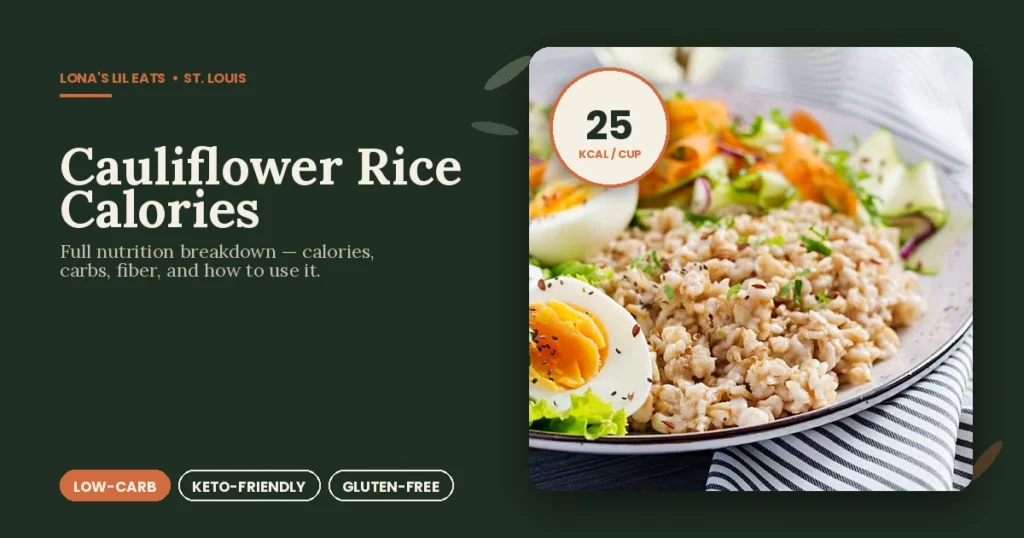
Cauliflower rice has about 25 to 29 calories per cup. White rice has 200. Here is the full breakdown — calories, carbs, fiber, and how to use it in real meals.
Cauliflower rice has about 25 to 29 calories per cup (roughly 107 grams). That is around 10 to 20 percent of the calories in the same amount of cooked white rice. It is low in calories, low in carbs, gluten-free, and rich in fiber, vitamin C, and vitamin K. The texture is close to rice, but the nutrition is closer to a vegetable.
How Many Calories Are in Cauliflower Rice? (Quick Answer)
One cup of cauliflower rice (about 107 grams, raw or cooked) gives you:
- 25 to 29 calories (about 27 on average)
- 5 grams of total carbs
- 2 to 3 grams of fiber
- 2 grams of protein
- Less than 1 gram of fat
That is roughly one-eighth the calories of a cup of cooked white rice. Same volume on your plate. Far less calorie load.
Cauliflower Rice Nutrition Facts (Per 1 Cup, ~107 g)
Cauliflower rice is mostly water. Over 90 percent of its weight is water. That is the main reason the calorie count stays so low.
Here is what one cup delivers:
- Calories: 25–29 kcal (about 27)
- Protein: 2 g
- Fat: less than 1 g
- Total carbohydrates: 5 g
- Fiber: 2–3 g
- Net carbs: 2–3 g
- Vitamin C: ~57% of the Daily Value
- Vitamin K: ~14% of the DV
- Folate: ~15% of the DV
Net carbs are the carbs your body actually digests. You calculate them by subtracting fiber from total carbs. For cauliflower rice, that lands at only 2 to 3 grams per cup.
Cauliflower Rice vs. White Rice: The Big Difference
Here is the side-by-side comparison, per 1 cup:
| Nutrient | Cauliflower Rice | White Rice |
| Calories | 25–29 | ~205 |
| Total Carbs | 5 g | ~44 g |
| Fiber | 2–3 g | ~1 g |
| Net Carbs | ~2 g | ~43 g |
| Protein | 2 g | ~4 g |
| Fat | <1 g | <1 g |
You save about 175 calories and 40 grams of carbs every time you swap one cup of cooked white rice for cauliflower rice.
That is a meaningful number for anyone watching calories, carbs, or blood sugar.
Why Cauliflower Rice Is So Low in Calories
The reason is simple: cauliflower is more than 90 percent water.
White rice is mostly starch. Starch is dense with calories. A cup of cooked rice packs a lot of carbohydrate energy into a small volume.
Cauliflower has almost no starch. It is fiber, water, and a small amount of protein. So even a generous serving stays light.
The fiber also slows digestion. That helps you feel full longer on fewer calories.
Is Cauliflower Rice Good for Weight Loss?
Yes. It is one of the most effective rice swaps for cutting calories without cutting portion size.
Three reasons it works:
- Lower calorie density. You can eat the same plate-size portion for far fewer calories.
- More fiber. Fiber promotes fullness and steadies blood sugar.
- More water. Water-dense foods help you feel satisfied without adding calories.
Studies on low-calorie, water-dense foods consistently link them to reduced hunger and lower overall calorie intake.
One thing to watch: what you cook it with. A cup of cauliflower rice fried in three tablespoons of oil is no longer a low-calorie food. Keep the oil light, and the savings stay real.
How to Make Cauliflower Rice at Home
It takes about 10 minutes.
Ingredients:
- 1 medium head of cauliflower (about 4 cups riced)
- 1 tablespoon olive oil or sesame oil
- Salt to taste
Steps:
- Cut the cauliflower into florets. Remove the thick stems.
- Rice it. Pulse the florets in a food processor in batches until they look like rice grains. Or grate by hand on the large holes of a box grater.
- Press out the moisture. Use a clean kitchen towel to squeeze excess water from the rice.
- Cook it. Heat the oil in a pan over medium heat. Add the cauliflower rice. Sauté for 5 to 7 minutes, stirring often.
- Season. Add salt, pepper, garlic, soy sauce, or whatever matches your dish.
Do not overcook it. Mushy cauliflower rice is the most common mistake. Stop when it is just tender.
How to Use Cauliflower Rice in Real Meals
Cauliflower rice works almost anywhere regular rice does. A few easy uses:
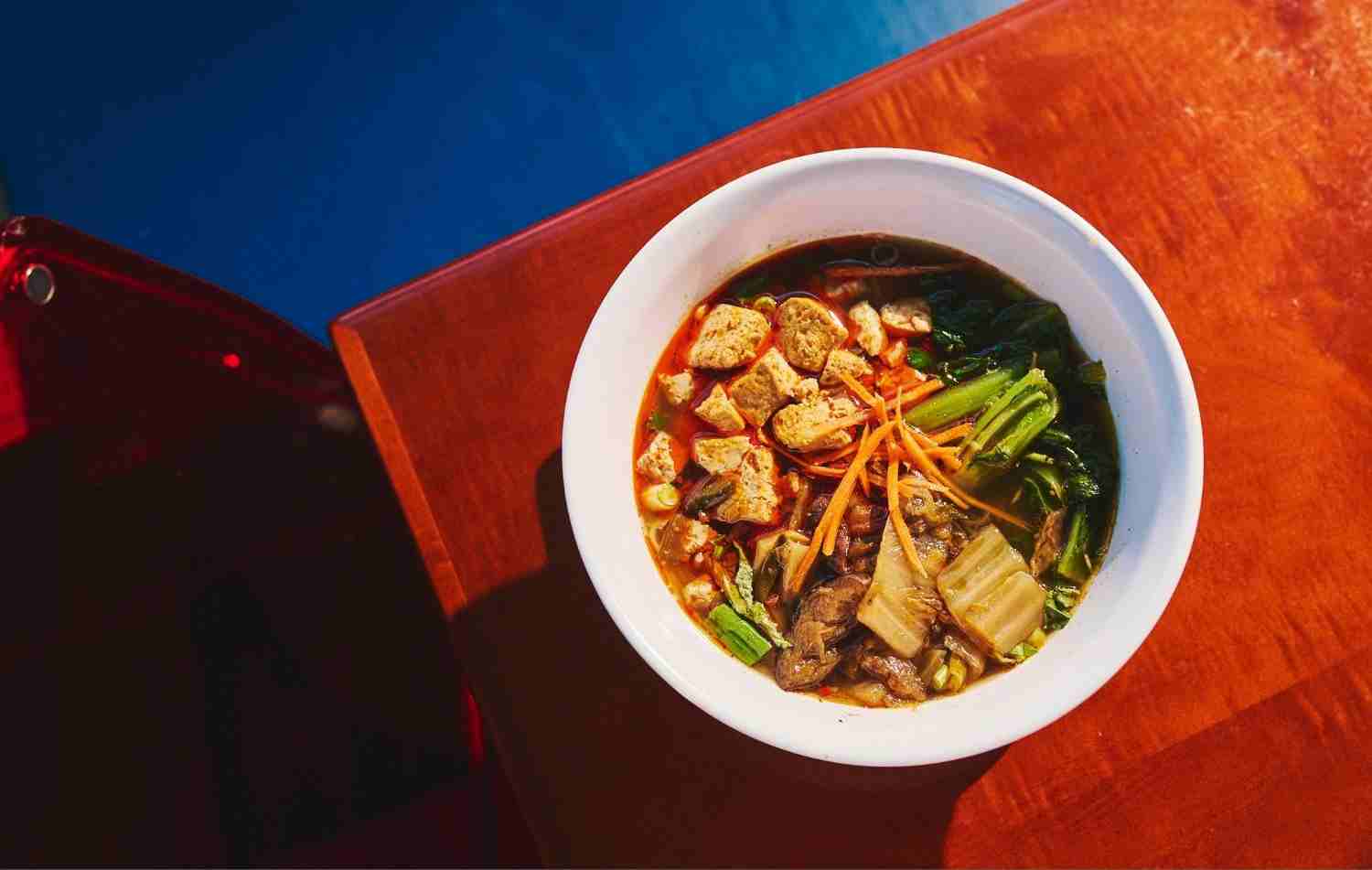
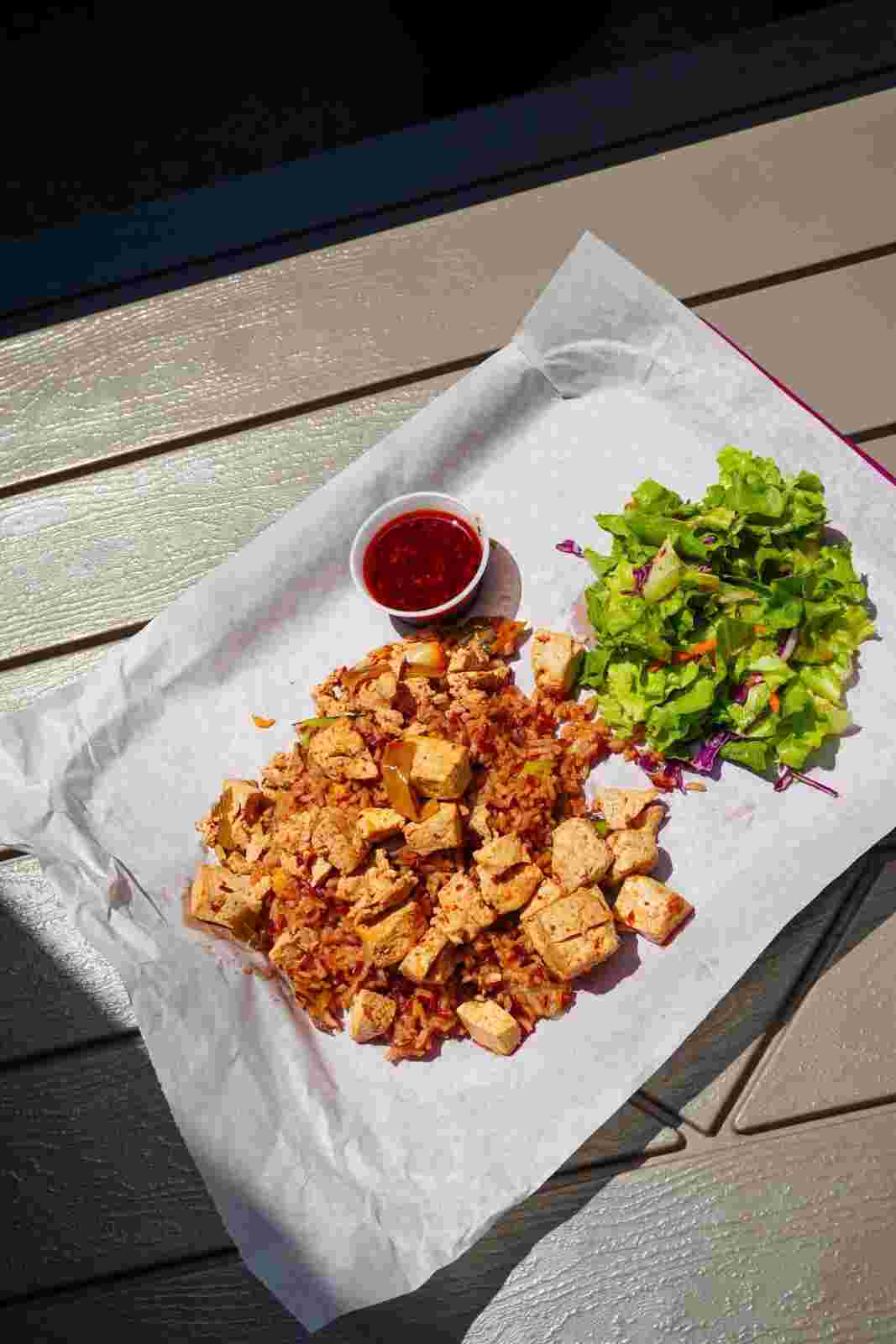
- Asian stir-fries — substitute for jasmine or fried rice. Pair with tofu, ginger, and tamari.
- Burrito bowls — use it as the base under beans, salsa, and avocado.
- Curry side — serves well under Thai or Indian curries with no flavor competition.
- Sushi bowls (deconstructed) — top with cucumber, avocado, and seared tofu.
- Rice paper roll filling — adds a soft, low-calorie base inside a fresh roll.
For an Asian-fusion meal with familiar rice texture and lower carbs, a cauliflower rice base under stir-fried tofu and vegetables is one of the easiest weeknight wins.
Frequently Asked Questions
How many calories are in 1 cup of cauliflower rice?
About 25 to 29 calories. The exact number depends on the cauliflower variety and how it is prepared. Raw and cooked cauliflower rice have nearly the same calorie count, since cooking does not add or remove calories from the vegetable itself.
Is cauliflower rice good for weight loss?
Yes. It is low in calories, low in carbs, high in fiber, and over 90 percent water. Swapping cauliflower rice for white rice can save about 175 calories per cup. That swap, done daily, equals roughly 1,225 calories saved per week.
How many calories are in cooked cauliflower rice?
About the same as raw — 25 to 29 calories per cup. Cooking does not change the calorie count of the cauliflower itself. What can change the number is added oil, butter, or sauce.
Does cauliflower rice taste like real rice?
Not exactly. Cauliflower has a mild vegetable flavor. The texture mimics rice well, but the taste is its own. The fix is the same as with plain rice: season it with the dish’s flavors — soy sauce, ginger, garlic, lime, fresh herbs.
Is cauliflower rice keto-friendly?
Yes. With only 2 to 3 grams of net carbs per cup, cauliflower rice is one of the most keto-friendly rice substitutes available.
Does cauliflower rice spike blood sugar?
No, not meaningfully. Total carbs are low, and the fiber-to-carb ratio is high. That keeps the impact on blood glucose small. It is a common recommendation for people managing type 2 diabetes.
Can I eat cauliflower rice every day?
For most people, yes. Cauliflower is a nutritious cruciferous vegetable. People with thyroid conditions should cook it (cooking reduces goitrogens) and check with their doctor about portion size. People prone to gas or bloating may want to start with smaller servings and build up.
Is frozen cauliflower rice as healthy as fresh?
Yes, roughly. Frozen cauliflower rice is usually flash-frozen at peak ripeness, which preserves nutrients well. Just check the label for added oils, sodium, or seasoning blends.
How much cauliflower rice equals 1 cup of regular rice?
About one cup of cauliflower rice replaces one cup of cooked regular rice in volume. The portion stays the same. The calorie count drops by roughly 175.
Does cauliflower rice have more fiber than white rice?
Yes. Cauliflower rice has 2 to 3 grams of fiber per cup. White rice has only about 1 gram. That is two to three times more fiber for one-eighth the calories.
Bottom Line
Cauliflower rice has about 25 to 29 calories per cup. White rice has around 200. That single swap is one of the simplest ways to cut calories and carbs without cutting portion size.
It is gluten-free, low-carb, high in fiber and vitamin C, and easy to make at home. It works in stir-fries, curries, bowls, and almost any dish that calls for rice.
At Lona’s Lil Eats, in St. Louis’s Fox Park neighborhood, we build dishes around fresh, scratch-made ingredients with a plant-forward philosophy. If you want to see what light, Asian-fusion eating looks like in practice, browse our vegetarian menu or come visit.
Related Reading on Lona’s Lil Eats
- Rice Paper Wraps Calories: A Full Nutrition Breakdown
- The Original Giant Rice Paper Wrap Recipe
- Why a Vegetarian Restaurant in St. Louis Matters
- Lona’s Among the Best Vegan Restaurants in St. Louis
- Chinese Cooking Traditions Behind Our Dishes
- Thai Cuisine Influences in Our Asian Fusion Menu
- About Lona’s Lil Eats — From Kunming to Fox Park
References & Further Reading
- Healthline. Cauliflower Rice: Nutrition, Benefits, and How to Make It. https://www.healthline.com/nutrition/cauliflower-rice-calories
- USDA FoodData Central. Cauliflower, raw — Nutrient profile. https://fdc.nal.usda.gov/
- The Healthy. Cauliflower Rice Nutrition Facts and Benefits. https://www.thehealthy.com/nutrition/cauliflower-rice/
- Virta Health. Is Cauliflower Rice Good for Weight Loss? https://www.virtahealth.com/weight-loss-foods/cauliflower-rice
- U.S. Department of Health & Human Services and U.S. Department of Agriculture. Dietary Guidelines for Americans, 2020–2025. https://www.dietaryguidelines.gov/