
This pumpkin curry recipe takes about 25 minutes by Hungry in Thailand’s timing: 10 minutes of prep and 15 of simmering. The pumpkin does most of the work, turning soft and sweet in a coconut sauce that a spoonful of red curry paste keeps from going flat.
Below you’ll find the base recipe, a loaded vegetable version for a bigger table, and the choices that change the result most: which pumpkin, which paste and how much coconut milk.
Pumpkin curry recipe: ingredients and method
The base is a Thai-style red curry for two, built on Hungry in Thailand’s version. Double it for four and use a wide pot so the pumpkin sits in a single layer.
- 1 3/4 cups peeled pumpkin, cut into bite-sized chunks
- 2 cups coconut milk, split into 1/2 cup and 1 1/2 cups
- 1 cup water
- 1 1/2 tbsp red curry paste
- 1 chili pepper, to taste
- 2 kaffir lime leaves, torn
- 1/4 cup sweet basil
- 2 tbsp fish sauce
- 1 tbsp palm sugar
- 1 cup thinly sliced pork, optional
The method is short, and the order matters more than the timing.
- Heat the 1/2 cup of coconut milk over medium heat until it bubbles. Stir in the curry paste and fish sauce until they melt into it.
- Add the remaining coconut milk, the water and the pumpkin. Turn the heat to low and simmer for 10 to 15 minutes, depending on chunk size, until the pumpkin is tender but not falling apart.
- If you’re using pork, add it now with the lime leaves and cook until it’s done through.
- Taste, then add palm sugar to suit your pumpkin. Stir in the basil and chili until the sugar dissolves and the basil wilts, and eat it straight away.
That sugar step deserves attention. How much you need depends on how sweet the pumpkin already is, so add it a little at a time rather than all at once.
Which pumpkin works in a pumpkin curry recipe?
Any firm pumpkin that holds its shape in simmering liquid works, and butternut squash is the easy stand-in when pumpkin isn’t around. The cubes should be soft in the middle with their edges intact.
Canned puree is a different story. When a reader asked Minimalist Baker about it, the author said they didn’t think it would work well, because the recipe wants whole, uncooked pieces. A puree melts into the sauce and you lose the bite.
If you only have a can, treat it as a thickener for a soup-style curry, not a swap for chunks. And if the idea of squash-for-pumpkin feels like cheating, it’s closer than you’d think: Iowa State University Extension says the main source of commercial pumpkin puree is the ‘Dickinson’ pumpkin, which belongs to the same species as butternut squash.
Red, yellow or green curry paste
Red is the classic, and yellow or green swap in without changing the method. Yellow tends to read milder and sweeter against the pumpkin, and green gives you a sharper, herbier bowl. Minimalist Baker’s one-pot version calls for 3 tablespoons of yellow or red paste.
Jarred pastes vary a lot in heat, so don’t tip in the whole amount at once. One reader on that recipe cut the paste back because their jar was very hot, and another suggested adding it to taste. Hungry in Thailand says Mae Ploy or Maesri store-bought pastes work well.
Whatever color you choose, the pumpkin curry recipe works best when you fry the paste in a little coconut milk first, as in step one above. It wakes up the paste’s aroma before the pumpkin goes in. Skipping that step is the usual reason a curry tastes raw and one-note.
How to keep the sauce creamy
Full-fat coconut milk gives the richest sauce. Hungry in Thailand recommends a full-fat brand for a rich, creamy texture, while Minimalist Baker defaults to light coconut milk and says to swap in full-fat for extra creaminess.
For a pumpkin curry recipe like this one, keep the pot at a simmer, not a boil. Minimalist Baker is explicit about it, and a gentle bubble also stops the pumpkin from collapsing before the sauce has thickened.
Want it thicker without more coconut? Blend about half the sauce with half the pumpkin, then stir it back into the pot. That’s the same trick Minimalist Baker uses, and it makes the curry feel richer with no extra ingredients.
A loaded one-pot version for four
When you want more vegetables and a bigger pot, use the framework from Minimalist Baker’s yellow pumpkin curry. It serves four and takes 15 minutes of prep and 30 of cooking.
Start with 1 1/2 tablespoons of coconut oil, then sauté a minced shallot, 2 tablespoons each of minced ginger and garlic, and a small red chili for 2 to 3 minutes. Add a sliced red bell pepper and 3 tablespoons of curry paste for 2 minutes, then 3 1/2 cups of cubed pumpkin or butternut for 2 more.
Pour in two 14-ounce cans of coconut milk with 2 tablespoons of maple syrup, 1 teaspoon of turmeric, a pinch of salt and 1 tablespoon of soy sauce. Cover on low for 10 to 15 minutes until the pumpkin softens.
Finish with 1 cup of chopped broccoli, 2 tablespoons of lemon juice and 2/3 cup of roasted cashews for 3 to 4 minutes. The lemon matters: it cuts the sweetness of the pumpkin and coconut so the bowl doesn’t turn cloying.
Leave out the fish sauce and the pork and this is a plant-based dinner already. Hungry in Thailand suggests tofu or tempeh with a vegan fish sauce, and our vegan menu options follow the same logic of building flavor without animal products.
Chicken, tofu, shrimp or nothing at all
The pork in this pumpkin curry recipe is optional. Hungry in Thailand lists chicken, beef, firm tofu, shrimp or other seafood as swaps, with the cooking time adjusted to match.
Add quick-cooking proteins like shrimp at the very end so they stay tender. Tofu can go in with the pumpkin, since it only needs to heat through.
Storing and reheating leftovers
Leftover curry keeps in the fridge for about three days and in the freezer for up to three months, according to Hungry in Thailand. Minimalist Baker gives it three to four days in the fridge and one month frozen, so plan around the shorter figures.
Thaw it in the fridge overnight and warm it on the stovetop over medium heat. Pumpkin keeps softening as it sits, so slightly firm cubes at the start give you a better bowl on day two.
Making it from scratch, and when you’d rather not
The difference between a good pumpkin curry recipe and a flat one is rarely a rare ingredient. It’s the unhurried part: chopping fresh, frying the paste, tasting the sugar and adjusting.
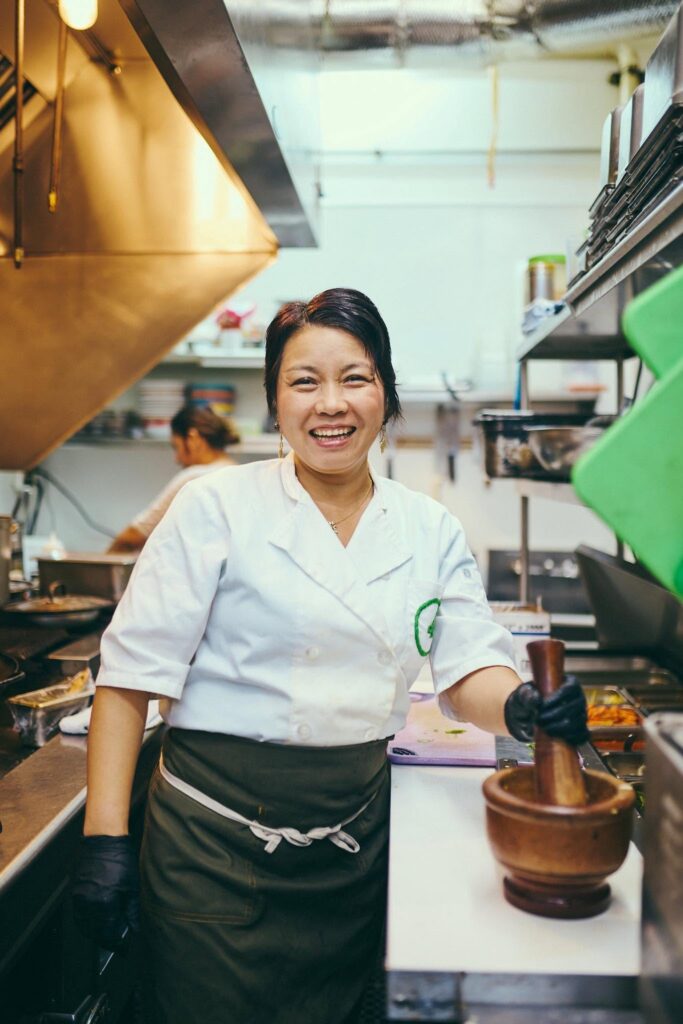
That’s how we cook at Lona’s LiL Eats. We use freshly chopped ingredients, no MSG, and make our seasonings and sauces from scratch, as you can read on our story page. If you want the idea of a warming bowl without turning on the stove, our menu is the place to start, and you’ll find us every Saturday lunch at the Soulard Farmers Market.
Already hooked on curry at home? Our coconut curry base with five variations pairs well with this one, since the sauce works for either.
Frequently asked questions
Can I use canned pumpkin in this pumpkin curry recipe?
You can, but expect a thicker, smoother sauce without any bite. Minimalist Baker’s author says whole, uncooked pieces are what the recipe needs, so fresh pumpkin or butternut gives the better bowl.
How long does pumpkin curry take to cook?
Hungry in Thailand’s version takes 25 minutes in total, with 10 for prep and 15 for cooking. Minimalist Baker’s loaded one-pot version takes about 45 minutes.
Can I freeze pumpkin curry?
Yes. Hungry in Thailand says up to three months, and Minimalist Baker says one month. Thaw it in the fridge overnight and reheat it on the stovetop.
How do I make it vegan?
Skip the pork and use tofu or tempeh, with a vegan fish sauce, and check that your curry paste has no shrimp paste. Minimalist Baker’s one-pot version is plant-based as written if you use coconut aminos or tamari.
Sources
- Thai Pumpkin Curry — Hungry in Thailand
- 1-Pot Pumpkin Yellow Curry — Minimalist Baker
- Is canned pumpkin actually made from a mixture of butternut and other squashes? — Iowa State University Extension