
Raw food recipes are the ideal fuel for outdoor enthusiasts because they require no stove, no fire, and no cleanup while delivering maximum nutrition from whole, unprocessed ingredients. Whether you are hiking a 15-mile loop, spending a weekend at a campsite, or packing lunch for a day of kayaking, raw meals are lightweight, portable, and packed with the natural energy your body needs to perform at its best.
At Lona’s Lil Eats in St. Louis, our entire philosophy revolves around fresh, handmade food with bold flavors and simple ingredients. That same approach translates perfectly to outdoor eating. You do not need a camp stove to eat well on the trail. You just need the right recipes.
Last updated: July 2026. Nutritional values are based on USDA FoodData Central data current as of this date.
Why Raw Food Is the Best Choice for Outdoor Adventures
Raw food works for outdoor enthusiasts better than most people expect. The practical advantages go beyond just skipping the cooking step.
No cooking equipment needed. Every ounce counts in a backpack. Eliminating a stove, fuel canister, pot, and utensils can save 2 to 4 pounds of pack weight. According to the American Hiking Society, reducing pack weight by even 10% can significantly decrease fatigue on long trails.
Higher water content keeps you hydrated. Raw fruits, vegetables, and sprouts contain 70% to 95% water by weight. On hot days when dehydration risk is high, water-rich raw foods supplement your water supply and help maintain electrolyte balance.
Faster digestion means faster energy. Raw plant foods are rich in natural enzymes and fiber that the body processes more quickly than heavy, cooked meals. This means less sluggishness after eating and faster access to usable energy on the trail.
No fire risk in dry conditions. During wildfire season or in areas with fire bans, raw food eliminates the need for any flame or heat source. Many national parks and wilderness areas restrict open fires during summer months, making no-cook meals a necessity rather than a preference.
Minimal waste and easier cleanup. Raw meals generate mostly compostable scraps like peels and cores. There are no greasy pots or burnt residue to deal with at camp.
| Advantage | Raw Food | Cooked Trail Food |
| Pack weight | Lighter (no stove or fuel) | Heavier (stove, fuel, pot) |
| Prep time at camp | Under 10 minutes | 20 to 45 minutes |
| Fire required | No | Yes (or stove) |
| Hydration support | High (water-rich foods) | Low (dehydrated meals need water) |
| Cleanup | Minimal | Pots, utensils, grease |
| Waste type | Compostable scraps | Packaging, fuel canisters |
What Nutrients Do Outdoor Enthusiasts Need from Raw Food?
Outdoor activities like hiking, cycling, climbing, and paddling demand a specific nutritional profile. Raw food can meet every one of these needs when planned correctly.
Carbohydrates for sustained energy. Your muscles burn glycogen during prolonged activity, and carbohydrates are the primary source. Raw fruits like bananas, dates, and mangoes deliver fast-acting natural sugars. Raw oats (soaked overnight) provide slower-burning complex carbs. The Academy of Nutrition and Dietetics recommends that endurance athletes get 55% to 65% of their calories from carbohydrates.
Healthy fats for calorie density. Fat provides 9 calories per gram compared to 4 calories per gram for carbs and protein. For weight-conscious backpackers, calorie-dense raw foods like nuts, seeds, avocados, and coconut are essential. A quarter cup of raw almonds delivers about 200 calories and 18 grams of healthy fat in a tiny, packable portion.
Protein for muscle repair. While raw food sources of protein are less concentrated than cooked meat, they are still effective. Hemp seeds provide 10 grams of complete protein per 3-tablespoon serving. Sprouted lentils, raw nuts, and nut butters all contribute meaningful protein for recovery after a strenuous day.
Electrolytes for hydration. Sweating depletes sodium, potassium, and magnesium. Raw foods naturally rich in these minerals include coconut water (potassium), celery (sodium), and pumpkin seeds (magnesium). These whole-food electrolyte sources absorb more gradually than sugary sports drinks, providing steadier hydration support.
| Nutrient | Why It Matters Outdoors | Best Raw Food Sources |
| Carbohydrates | Sustained energy for endurance | Bananas, dates, mangoes, soaked oats |
| Healthy fats | Calorie density, joint support | Almonds, walnuts, avocado, coconut |
| Protein | Muscle repair after exertion | Hemp seeds, sprouted lentils, nut butter |
| Potassium | Prevents cramping | Coconut water, bananas, dried apricots |
| Magnesium | Muscle function, nerve signaling | Pumpkin seeds, cashews, spinach |
| Iron | Oxygen transport to muscles | Raw spinach, sunflower seeds, tahini |
| Vitamin C | Immune support, iron absorption | Bell peppers, citrus, kiwi, berries |
12 Trail-Ready Raw Food Recipes for Every Outdoor Activity
These recipes are organized by when and how you would eat them on a typical outdoor adventure: quick trail snacks you can eat while moving, substantial lunch recipes for a midday break, and satisfying dinners for basecamp.
Trail Snacks (Eat While Moving)
1. No-Bake Energy Balls with Dates and Almonds
These energy balls pack roughly 150 calories each and hold together without refrigeration for up to 5 days.
Ingredients (makes 12 balls):
- 1 cup pitted Medjool dates
- 1/2 cup raw almonds
- 1/4 cup unsweetened shredded coconut
- 2 tablespoons raw cacao powder
- 1 tablespoon chia seeds
- Pinch of sea salt
Instructions:
- Pulse almonds in a food processor until coarsely ground.
- Add dates, cacao, chia seeds, and salt. Process until the mixture forms a sticky dough.
- Roll into 12 balls, about 1 inch each.
- Roll each ball in shredded coconut.
- Store in a reusable container or wrap individually in wax paper.
Per ball: approximately 150 calories, 3 grams protein, 7 grams fat, 20 grams carbs.
If you enjoy these no-bake snacks, you will love the energy ball recipes in our raw vegan diet recipes guide, which includes several more flavor variations.
2. Spiced Trail Mix with Raw Cacao Nibs
Store-bought trail mix is often loaded with added sugar, vegetable oils, and artificial flavors. This homemade version uses only raw, whole ingredients.
Ingredients (makes about 3 cups):
- 1 cup raw cashews
- 1/2 cup raw pumpkin seeds
- 1/2 cup raw sunflower seeds
- 1/4 cup raw cacao nibs
- 1/4 cup dried goji berries
- 1/4 cup unsweetened coconut flakes
- 1/2 teaspoon cinnamon
- 1/4 teaspoon cayenne pepper (optional)
Instructions:
- Combine all ingredients in a large bowl and toss to distribute the spices.
- Portion into zip-lock bags or small reusable containers (about 1/2 cup per serving).
Per 1/2 cup serving: approximately 280 calories, 9 grams protein, 20 grams fat, 15 grams carbs.
This trail mix stays fresh in a pack for up to 2 weeks without refrigeration.
3. Banana-Almond Butter Roll-Ups
This is the simplest trail snack that delivers serious energy.
Ingredients (per serving):
- 1 large banana
- 2 tablespoons raw almond butter
- 1 tablespoon hemp seeds
- 1 sheet rice paper (optional, for a neater wrap)
Instructions:
- Spread almond butter along one side of the banana.
- Sprinkle hemp seeds on top.
- Eat as is, or wrap in a softened rice paper sheet for a cleaner, more portable option.
Per serving: approximately 350 calories, 12 grams protein, 18 grams fat, 35 grams carbs.
Midday Trail Lunches (Eat at a Rest Stop)
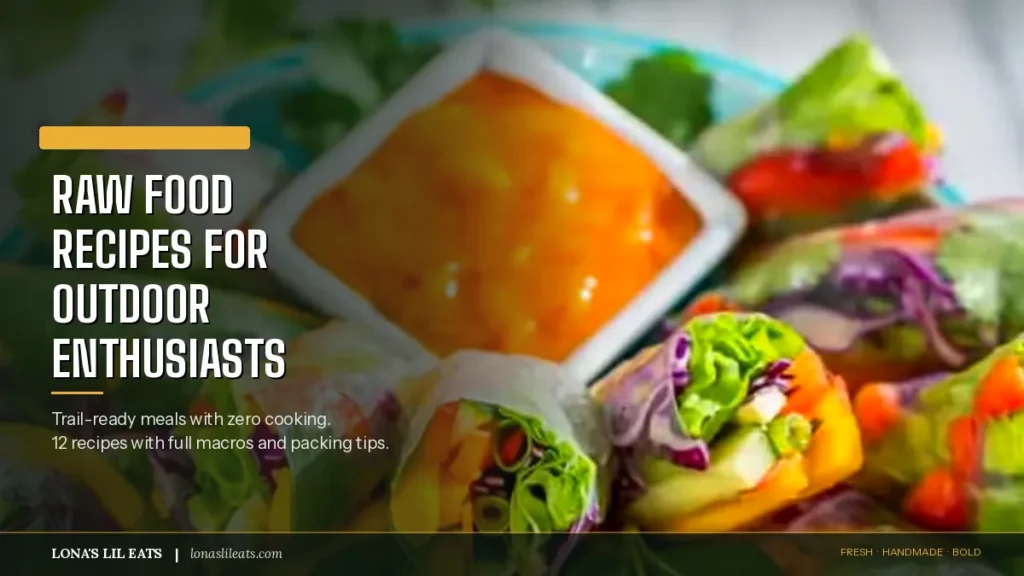
4. Raw Veggie Rice Paper Wraps with Peanut-Lime Dipping Sauce
These wraps are inspired by the same philosophy behind our Giant Rice Paper Wrap at Lona’s Lil Eats: fresh vegetables, bold sauce, and clean energy. Rice paper is naturally gluten-free and adds only 30 to 45 calories per sheet.
Ingredients (makes 4 wraps):
- 4 medium rice paper sheets
- 1 large carrot, julienned
- 1 cucumber, sliced into thin strips
- 1 avocado, sliced
- 1 cup red cabbage, shredded
- Fresh mint and cilantro leaves
- 1/4 cup raw peanuts, roughly chopped
Peanut-Lime Sauce:
- 3 tablespoons raw peanut butter (or almond butter)
- Juice of 1 lime
- 1 tablespoon tamari or coconut aminos
- 1 teaspoon fresh ginger, grated
- Water to thin
Instructions:
- Whisk peanut butter, lime juice, tamari, and ginger together. Add water one teaspoon at a time until the sauce reaches a drizzle consistency.
- Dip each rice paper sheet in lukewarm water for 10 to 15 seconds until pliable.
- Lay flat on a clean surface and arrange vegetables, herbs, avocado, and peanuts across the lower third.
- Fold the bottom edge up over the filling, tuck in the sides, and roll tightly.
- Pack the sauce in a small leak-proof container.
Per wrap (with sauce): approximately 220 calories, 7 grams protein, 14 grams fat, 18 grams carbs.
Trail tip: Pre-roll the wraps at home and store them in a damp towel inside a sealed container. They stay fresh for 6 to 8 hours without refrigeration in moderate temperatures.
5. Zucchini Noodle Salad with Sesame-Ginger Dressing
This recipe brings the bold flavors of Asian cuisine to the trail without any cooking. The dressing draws from the same Chinese cooking traditions that inspire the menu at Lona’s Lil Eats.
Ingredients (serves 2):
- 2 medium zucchini, spiralized or julienned
- 1 large carrot, shredded
- 1/2 cup edamame (shelled, raw or blanched)
- 2 tablespoons sesame seeds
- 1/4 cup fresh cilantro, chopped
Sesame-Ginger Dressing:
- 2 tablespoons tahini
- 1 tablespoon tamari
- 1 tablespoon rice vinegar
- 1 teaspoon sesame oil
- 1 teaspoon fresh ginger, grated
- Juice of half a lime
Instructions:
- Spiralize the zucchini and pack the noodles in a sealed container with a paper towel to absorb excess moisture.
- Whisk all dressing ingredients together in a small jar.
- At your rest stop, toss the noodles with carrot, edamame, and dressing. Top with sesame seeds and cilantro.
Per serving: approximately 260 calories, 11 grams protein, 16 grams fat, 20 grams carbs.
6. Stuffed Bell Peppers with Walnut “Meat” and Avocado
These stuffed peppers deliver a satisfying, savory meal that feels substantial without weighing you down on the second half of your hike.
Ingredients (serves 2):
- 2 large bell peppers, halved and seeded
- 1 cup raw walnuts
- 1 tablespoon tamari
- 1 teaspoon cumin
- 1/2 teaspoon smoked paprika
- 1 avocado, diced
- 1/4 cup salsa or diced tomatoes
- Fresh cilantro for garnish
Instructions:
- Pulse walnuts in a food processor until crumbly (not a paste).
- Toss the walnut crumble with tamari, cumin, and paprika.
- Spoon the walnut “meat” into each pepper half.
- Top with avocado, salsa, and cilantro.
Per serving (2 halves): approximately 420 calories, 12 grams protein, 35 grams fat, 20 grams carbs.
Trail tip: Prep the walnut meat at home and store it separately. Assemble at camp for the freshest result.
7. Thai-Inspired Mango and Cashew Lettuce Cups
The balance of sweet, salty, sour, and spicy in this recipe reflects the same Thai cuisine traditions that influence many dishes at Lona’s Lil Eats.
Ingredients (serves 2):
- 1 large head butter lettuce
- 1 ripe mango, diced
- 1/2 cup raw cashews, roughly chopped
- 1/4 cup red onion, finely diced
- 1 small jalapeno, seeded and minced
- Fresh basil and mint leaves
- Juice of 1 lime
- 1 tablespoon tamari
Instructions:
- Separate lettuce into individual cups.
- In a container, combine mango, cashews, red onion, jalapeno, and herbs.
- Drizzle with lime juice and tamari, then toss gently.
- Spoon the filling into lettuce cups at your rest stop.
Per serving (3 cups): approximately 310 calories, 9 grams protein, 16 grams fat, 35 grams carbs.
Basecamp Dinners (No-Cook Campsite Meals)
8. Raw Pad Thai with Kelp Noodles and Tamarind Sauce
Kelp noodles are a raw, zero-calorie noodle made from seaweed that requires no cooking at all. Just rinse, toss, and eat.
Ingredients (serves 2):
- 1 package (12 oz) kelp noodles, rinsed and drained
- 1 large carrot, julienned
- 1 red bell pepper, sliced thin
- 1/2 cup bean sprouts
- 1/4 cup raw cashews, chopped
- 2 green onions, sliced
- Fresh cilantro and lime wedges
Tamarind Sauce:
- 2 tablespoons tamarind paste
- 1 tablespoon almond butter
- 1 tablespoon tamari
- 1 tablespoon lime juice
- 1 teaspoon maple syrup or date paste
- 1/4 teaspoon red pepper flakes
Instructions:
- Soak kelp noodles in warm water for 10 minutes to soften, then drain.
- Whisk all sauce ingredients together until smooth.
- Toss noodles with vegetables and sauce.
- Top with cashews, cilantro, green onions, and a squeeze of lime.
Per serving: approximately 290 calories, 8 grams protein, 14 grams fat, 32 grams carbs.
9. Overnight Soaked Oats with Wild Berries and Hemp Seeds
While technically a breakfast recipe, this is equally good as a high-carb dinner the night before an early morning summit push.
Ingredients (serves 1):
- 1/2 cup raw rolled oats
- 3/4 cup plant milk or water
- 1 tablespoon chia seeds
- 1 tablespoon hemp seeds
- 1/2 cup fresh or freeze-dried berries
- 1 tablespoon raw honey or maple syrup
- Pinch of cinnamon
Instructions:
- Combine oats, liquid, and chia seeds in a jar or container.
- Seal and let soak for at least 4 hours (or overnight in your pack or tent).
- In the morning, stir and top with berries, hemp seeds, honey, and cinnamon.
Per serving: approximately 380 calories, 14 grams protein, 12 grams fat, 55 grams carbs.
10. Raw Cauliflower “Couscous” Bowl with Lemon-Herb Dressing
Cauliflower pulsed to a rice-like texture serves as a filling base that is low in calories and high in volume. For more on the nutritional profile of cauliflower rice, see our detailed breakdown of cauliflower rice calories.
Ingredients (serves 2):
- 2 cups cauliflower, riced (pulsed in a food processor at home)
- 1 cup cherry tomatoes, halved
- 1/2 cucumber, diced
- 1/4 cup fresh parsley, chopped
- 1/4 cup fresh mint, chopped
- 2 tablespoons raw pumpkin seeds
- 2 tablespoons extra-virgin olive oil
- Juice of 1 lemon
- Salt and pepper to taste
Instructions:
- Rice the cauliflower at home and pack in a sealed container.
- At camp, toss the cauliflower rice with tomatoes, cucumber, herbs, and pumpkin seeds.
- Dress with olive oil and lemon juice. Season with salt and pepper.
Per serving: approximately 200 calories, 7 grams protein, 14 grams fat, 14 grams carbs.
11. Avocado-Mango Summer Rolls with Coconut-Lime Drizzle
A lighter, tropical variation of our rice paper wraps that works beautifully as a cool evening meal after a hot day on the trail. Check our guide to rice paper nutrition facts for a full breakdown of what the wrapper contributes.
Ingredients (makes 4 rolls):
- 4 rice paper sheets
- 1 ripe avocado, sliced
- 1 small mango, julienned
- 1/2 cup shredded purple cabbage
- Fresh mint and basil leaves
- 2 tablespoons toasted coconut flakes
Coconut-Lime Drizzle:
- 3 tablespoons coconut cream
- Juice of 1 lime
- 1 teaspoon tamari
- 1/2 teaspoon agave or maple syrup
Instructions:
- Dip each rice paper sheet in warm water for 10 to 15 seconds.
- Layer avocado, mango, cabbage, herbs, and coconut on the lower third.
- Roll tightly, folding in the sides.
- Serve with coconut-lime drizzle on the side.
Per roll (with drizzle): approximately 190 calories, 3 grams protein, 12 grams fat, 18 grams carbs.
12. Power-Packed Raw Granola for Multi-Day Trips
This dry granola stores for weeks and provides a calorie-dense base for breakfast bowls, snacking, or topping fresh fruit at any campsite.
Ingredients (makes about 4 cups):
- 1 cup raw rolled oats
- 1/2 cup raw almonds, roughly chopped
- 1/2 cup raw pecans, roughly chopped
- 1/4 cup raw sunflower seeds
- 1/4 cup raw pumpkin seeds
- 1/4 cup unsweetened coconut flakes
- 1/4 cup raw cacao nibs
- 1/3 cup raw honey or maple syrup
- 2 tablespoons coconut oil, melted
- 1 teaspoon vanilla extract
- 1/2 teaspoon cinnamon
- Pinch of sea salt
Instructions:
- Combine all dry ingredients in a large bowl.
- Whisk honey, coconut oil, vanilla, and cinnamon together.
- Pour the wet mixture over the dry ingredients and stir thoroughly.
- Spread on a dehydrator tray at 115°F for 12 to 14 hours (or spread on a parchment-lined baking sheet and let air-dry for 24 hours in a warm, dry room).
- Break into clusters once fully dry. Store in airtight bags.
Per 1/2 cup serving: approximately 320 calories, 8 grams protein, 20 grams fat, 30 grams carbs.
How to Pack and Store Raw Food for the Trail
Proper packing prevents spoilage, contamination, and soggy meals. Follow these guidelines for raw food that stays fresh and safe throughout your trip.
Temperature management. Most raw produce stays safe without refrigeration for 4 to 8 hours in moderate temperatures (below 80°F). According to the USDA food safety guidelines, perishable food should not sit above 40°F for more than 2 hours, or 1 hour if the temperature exceeds 90°F. For day hikes, an insulated lunch bag with a small ice pack extends safe time significantly.
Packing strategy by trip length:
| Trip Length | Best Raw Foods | Storage Method |
| Day hike (4 to 8 hours) | Fresh wraps, cut fruit, veggie sticks, nut butter | Insulated bag with ice pack |
| Overnight (1 to 2 nights) | Energy balls, trail mix, whole fruits, overnight oats | Sealed containers, bear canister if required |
| Multi-day (3+ days) | Dried fruits, nuts, seeds, granola, nut butters | Dry bags, waterproof stuff sacks |
Best containers for trail raw food:
- Silicone zip bags (reusable, leak-proof, packable)
- Wide-mouth jars with screw lids (overnight oats, dressings)
- Beeswax wraps (wrapping cut fruit, halved avocados)
- Small squeeze bottles (sauces and dressings)
Foods that travel worst (avoid for hikes longer than 4 hours): Leafy greens wilt quickly. Sliced avocado browns fast. Tomatoes bruise easily in a backpack. Sprouts spoil rapidly without refrigeration.
Foods that travel best: Whole fruits with peels (bananas, oranges, apples). Nuts and seeds. Nut butter in squeeze packets. Dried fruit. Energy balls. Whole bell peppers and carrots.
Raw Food Safety Tips Every Outdoor Enthusiast Should Know
Eating raw food outdoors introduces specific food safety considerations that differ from cooking at a kitchen counter.
Wash produce before you leave. Trail water and hand sanitizer are not substitutes for a proper wash. Clean all fruits and vegetables thoroughly at home before packing. The FDA recommends washing produce under running water even if you plan to peel it, because bacteria on the surface can transfer to the flesh when you cut.
Keep raw foods separated from other items. Store raw food in its own sealed container or bag to prevent contamination from sunscreen, insect repellent, or dirt inside your pack.
Use clean hands or utensils. Carry biodegradable soap or hand sanitizer and clean your hands before handling raw food at a rest stop. Trail grime and bacteria from rocks, logs, and gear can easily transfer to food.
Know when to discard. If cut produce has been above 90°F for more than 1 hour, or above 40°F for more than 4 hours, discard it. When in doubt, rely on smell, texture, and appearance. Slimy, off-smelling, or discolored produce is not safe to eat.
Do not forage without expertise. Wild berries, mushrooms, and greens can be toxic. Never eat wild plants unless you have been trained in plant identification or are with an experienced forager. According to the American Association of Poison Control Centers, plant ingestion is among the top reasons for poison control calls each year.
Raw Food Meal Plan for a Weekend Camping Trip
This two-day meal plan provides approximately 2,000 to 2,200 calories per day, appropriate for moderate outdoor activity. Adjust portions up for strenuous hiking or climbing.
Day 1
| Meal | Recipe | Calories |
| Breakfast | Overnight Soaked Oats with Berries and Hemp Seeds | 380 |
| Trail snack | 3 Energy Balls | 450 |
| Lunch | Raw Veggie Rice Paper Wraps (2) with Peanut-Lime Sauce | 440 |
| Afternoon snack | 1/2 cup Spiced Trail Mix | 280 |
| Dinner | Raw Pad Thai with Kelp Noodles | 290 |
| Evening snack | 1 banana with 2 tbsp almond butter | 290 |
| Daily total | 2,130 |
Day 2
| Meal | Recipe | Calories |
| Breakfast | Power-Packed Raw Granola with plant milk | 380 |
| Trail snack | Banana-Almond Butter Roll-Up | 350 |
| Lunch | Thai Mango and Cashew Lettuce Cups | 310 |
| Afternoon snack | 1/2 cup Trail Mix | 280 |
| Dinner | Stuffed Bell Peppers with Walnut Meat | 420 |
| Evening snack | 2 Medjool dates with cashew butter | 240 |
| Daily total | 1,980 |
Best Raw Foods for Specific Outdoor Activities
Different activities have different caloric and nutritional demands. Here is how to tailor your raw food choices to your sport.
Hiking and backpacking (moderate to high endurance). Focus on calorie-dense, lightweight foods. Nuts, nut butters, dried fruits, and energy balls deliver the most calories per ounce. Pack at least 200 to 300 calories per hour of hiking. The Leave No Trace Center for Outdoor Ethics also recommends packing out all food waste, including fruit peels and nut shells, which is easier with raw food than cooked meals.
Trail running (high intensity, fast metabolism). Prioritize fast-digesting carbohydrates that will not cause stomach cramps. Dates, bananas, and dried mango are ideal mid-run fuel. Avoid high-fat foods like nuts immediately before or during a run, as fat slows digestion.
Rock climbing (power and grip endurance). Climbers need compact, calorie-dense snacks that can be eaten between pitches. Energy balls and nut butter packets are easy to eat without a full rest stop. Avoid messy or sticky foods that could compromise grip.
Kayaking and paddleboarding (moderate endurance, limited storage). Waterproof storage is essential. Pack raw foods in sealed silicone bags or dry bags. Rice paper wraps and energy balls handle moisture exposure better than most options. Avoid foods that require utensils or plates.
Winter sports and snowshoeing. Cold weather increases caloric needs by 10% to 40%, according to research published in the Journal of Applied Physiology. Choose calorie-dense raw fats: coconut butter, macadamia nuts, and extra nut butter. Cold temperatures also keep perishable raw foods fresh much longer.
How Raw Food Recipes Compare to Dehydrated Trail Meals
Dehydrated backpacking meals are popular because of their light weight and long shelf life, but they come with notable trade-offs.
| Factor | Raw Food Recipes | Dehydrated Trail Meals |
| Calorie density | Medium to high | High |
| Nutrient retention | Maximum (no heat processing) | Reduced (heat destroys some vitamins) |
| Sodium content | Low (controlled by you) | High (most brands add 600 to 1,000+ mg per serving) |
| Prep at camp | Under 5 minutes | 10 to 20 minutes (boiling water, rehydrating) |
| Water required | None (food contains water) | 1 to 2 cups per meal |
| Taste and variety | Fresh, vibrant, customizable | Often monotonous, processed flavor |
| Cost per meal | $2 to $5 (homemade) | $8 to $14 (commercial brands) |
| Shelf life | 1 to 14 days (depending on ingredients) | 1 to 5 years |
The best approach for multi-day trips is often a hybrid: raw food for days 1 and 2 when fresh ingredients are still viable, then dehydrated meals for days 3 onward when shelf life matters more.
How to Transition to Raw Trail Food If You Are Used to Cooked Meals
Switching entirely to raw food on the trail can cause digestive discomfort if your body is not accustomed to high-fiber, raw plant foods. A gradual transition works best.
Week 1 at home: Replace one meal per day with a raw option. Start with raw breakfasts like overnight oats or smoothie bowls, which are easy on the stomach.
Week 2 at home: Add a raw lunch, such as the rice paper wraps or zucchini noodle salad from this guide. Notice how your digestion responds.
Week 3 at home: Try a full raw day. Monitor your energy levels, satiety, and how you feel physically.
First trail test: On your next short day hike, pack entirely raw food and evaluate whether you feel adequately fueled. Adjust portions and recipes based on what you learn.
If you experience bloating or gas during the transition, it is typically because of a rapid increase in dietary fiber. Drinking more water and introducing raw foods gradually resolves this for most people within 1 to 2 weeks.
FAQs About Raw Food for Outdoor Enthusiasts
Can I get enough calories from raw food on a strenuous hike?
Yes, but it requires intentional planning. Raw nuts, seeds, nut butters, avocados, and dried fruits are calorie-dense enough to meet the 3,000 to 4,500 calorie demands of a full day of strenuous hiking. The key is packing enough fat-rich foods. A cup of raw almonds contains over 800 calories.
How do I keep raw food fresh in a backpack without refrigeration?
Choose ingredients with natural shelf stability: whole fruits with peels, nuts, seeds, dried fruit, nut butters, and energy balls. For perishable items like cut vegetables and rice paper wraps, use an insulated bag with a frozen water bottle that doubles as your drinking water as it thaws.
Is raw food safe to eat at high altitudes?
Yes. Altitude does not affect the safety of raw food. In fact, raw food has an advantage at altitude because cooking becomes more difficult (water boils at lower temperatures, requiring longer cook times and more fuel). The lower air temperatures at altitude also help keep perishable raw food cool longer.
What raw foods provide the most energy per ounce for backpacking?
The most calorie-dense raw foods per ounce include macadamia nuts (about 200 calories per ounce), almonds (about 165 calories per ounce), walnuts (about 185 calories per ounce), dried dates (about 80 calories per ounce), and coconut butter (about 180 calories per ounce).
Can I follow a raw food diet on a multi-day backpacking trip?
For trips of 1 to 3 days, a fully raw diet is practical and enjoyable. For trips longer than 3 days, a hybrid approach works better because most fresh produce will not last beyond that point without refrigeration. Supplement raw staples (nuts, seeds, dried fruit, granola) with lightweight dehydrated options for the later days.
Are raw food diets suitable for kids on family camping trips?
Raw food snacks like energy balls, trail mix, fresh fruit, and nut butter with vegetable sticks are excellent for kids. However, children may need more calorie-dense options and familiar flavors to stay fueled and happy. For more ideas on feeding kids outdoors and at restaurants, see our guide to family-friendly restaurants in St. Louis.
How do raw food recipes compare to the food at Lona’s Lil Eats?
Many of these trail recipes share the same foundation as what we serve at Lona’s Lil Eats: fresh vegetables, bold sauces made from scratch, and simple whole ingredients prepared with care. The difference is that at our restaurant, you get the full experience of handmade dumplings, stir-fried options, and our famous Giant Rice Paper Wrap. Visit us at 2199 California Avenue to taste the inspiration behind these recipes.
At Lona’s Lil Eats, fresh and handmade is not just a phrase on the wall. It is how we cook every dish, every day. Whether you are fueling up before a hike or sitting down in our Fox Park dining room, the philosophy is the same: bold flavors, real ingredients, and food that makes you feel good. Explore our full menu, discover why we are considered one of the best vegan-friendly restaurants in St. Louis, or plan your next event with our catering service.
For more healthy eating inspiration, browse our guides on rice paper wraps calories, fresh spring roll calories, and the healthiest fast food options when you are not on the trail.
This guide is refreshed seasonally to reflect new recipes and updated food safety recommendations. Bookmark it and check back before your next adventure.