
Few food labels cover as much ground as Asian fusion, from Chinese ingredients cooked with French technique to Korean short rib folded into a Mexican taco. So what is Asian fusion cuisine? It’s cooking that deliberately blends Asian traditions with each other, or with non-Asian ones, to make dishes neither side would have produced alone.
That’s the short version. The longer one has an argument about who invented the term, a split between fusion and pan-Asian cooking, and a fair number of chefs who’d rather you didn’t use the word at all.
What is Asian fusion cuisine, exactly?
Asian fusion cuisine combines ingredients, methods or flavors from different culinary traditions, with at least one of them Asian. Wikipedia describes fusion in general as cuisine that draws on culinary traditions from different countries, regions or cultures, and notes that the Oxford English Dictionary added the term in 2002 as a style of cookery that blends ingredients and methods of preparation from different countries.
In practice that gives you two flavors. One mixes Asian cuisines together, so a menu might put East Asian, Southeast Asian and South Asian dishes side by side. The other crosses Asian cooking with something else: French technique, Mexican formats, Southern ingredients.
Culinary school Escoffier makes the point that fusion cuisine is not a single style of food. Fusion cooking is a method, not a menu. Two Asian fusion restaurants can have almost nothing on their plates in common.
Where did the term come from?
The word is younger than the habit. Mixing cuisines is as old as people trading ingredients, but the label took hold in the 1980s.
Chef Norman Van Aken is generally credited with the first use of "fusion cooking", in a 1988 symposium speech in Santa Fe, according to Wikipedia. Escoffier adds that the Smithsonian credits him with borrowing the word from jazz fusion.
Earlier cooks were doing the thing before it had a name. Wikipedia says Richard Wing combined French and Chinese cooking at the Imperial Dynasty restaurant in Hanford, California, in the 1960s. Wolfgang Puck’s Chinois on Main opened in Santa Monica in 1983, pairing Asian ingredients with French cooking methods, and it’s still the restaurant most often named as the style’s landmark, though who deserves the credit is disputed.
Is Asian fusion the same as pan-Asian?
No, though menus blur them constantly. Asian fusion draws on the separate cuisines of several Asian countries, or on Asian and Western ones. Pan-Asian cooking, as Wikipedia frames it, uses ingredients shared across Asia, such as rice.
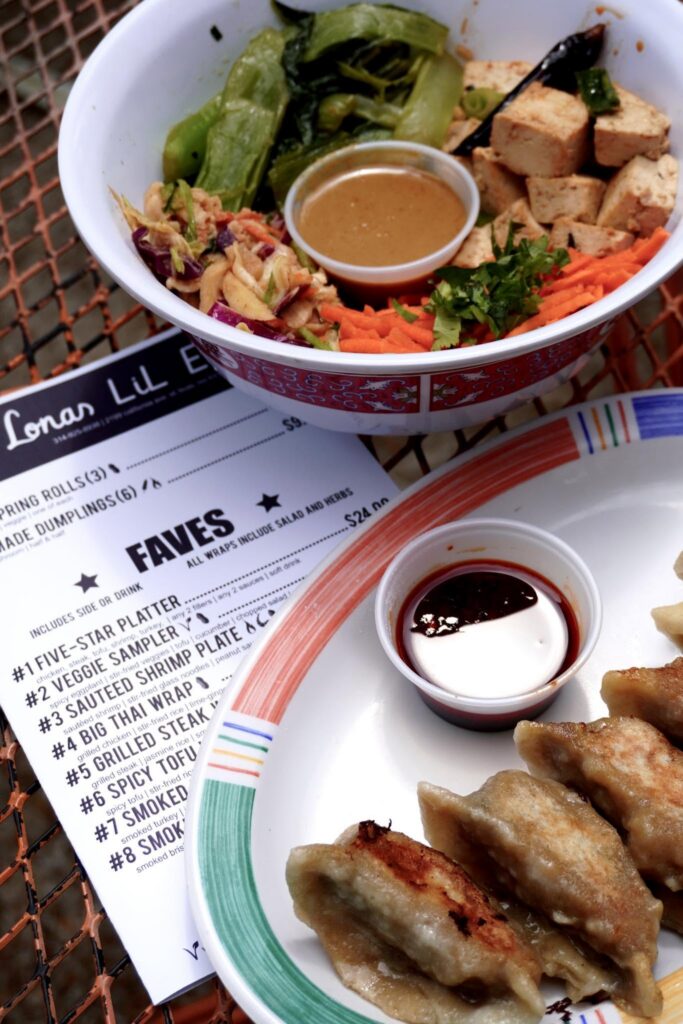
The rice bowl is the classic pan-Asian example: garlic with chili, or stir-fried vegetables with tofu, over rice. If you’re hunting for a bowl in town, our guide to the best rice bowls in St. Louis goes through what separates a real one from a quick assembly.
Five examples of Asian fusion dishes and restaurants
Abstract definitions only go so far. These examples of Asian fusion, each from the sources above, show how wide the style runs, and how different Asian fusion dishes can look from one kitchen to the next.
| Example | What it blends | Where and when |
|---|---|---|
| Chinois on Main | Asian ingredients with French cooking methods | Santa Monica, opened 1983 |
| California roll | Japanese sushi adapted to American tastes | Created in America in the later 20th century |
| Foie gras siumai in Sauternes broth | Chinese dumpling with French ingredients | Blue Ginger, Wellesley, Massachusetts |
| Kogi Truck | Korean and Mexican cuisines | Launched by Roy Choi in 2008 |
| Vietnamese pho with Southern ingredients | Vietnamese soup with Southern American flavors | MoPho, New Orleans |
The California roll shows the quieter end of the spectrum. A popular myth says it puts the rice and seaweed on the outside because Americans disliked raw fish, which makes it a story about adapting to local taste more than a chef’s grand statement.
Kogi sits at the other end. According to a Resy essay on the fusion revival, it joined Korean and Mexican cooking from a truck, and it came after a mid-2000s turn toward casual food at David Chang’s Momofuku Noodle Bar and Ssäm Bar.
Why plenty of cooks dislike the label
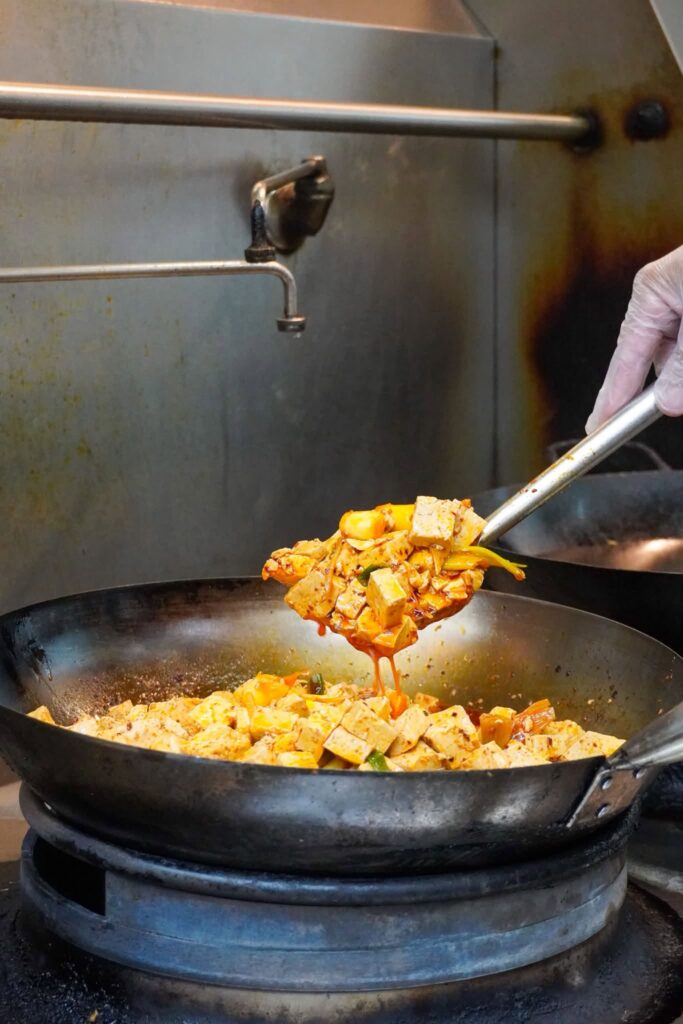
Asian fusion has a branding problem. Food Republic’s George Embiricos quotes Angela Garbes of Seattle’s The Stranger calling it the catchall way to describe any restaurant using Asian ingredients, and he agrees it’s ambiguous enough to retire.
The Resy essay is blunter about the 1990s. Wasabi and pineapple became what its author calls meaningless shortcuts to worldliness, and it quotes a 1999 New York Times review of Roy’s New York: "If clowns had a cuisine, this would be it."
Escoffier lands in the same place from a different direction. Many chefs, it notes, say they simply cook with flavors and techniques that reflect their own backgrounds, and the restaurants critics faulted were the ones that brought together too many clashing elements.
What is Asian fusion cuisine at its best?
Look for focus first. Escoffier’s examples of fusion that worked, Chinois and Nobu among them, developed a tight, recognizable style rather than throwing every ingredient at a plate.
Look for a point of view too. MoPho builds on New Orleans’ multicultural character, and Momofuku and Mission Chinese Food reimagine familiar comfort foods in unexpected ways. The common thread is that the combination makes sense to the person cooking it.
A practical test for any Asian fusion restaurant menu is simple. If you can say in one sentence why two things are on the same plate, it’s probably a considered dish. If you can’t, it’s probably a gimmick.
Where our food fits
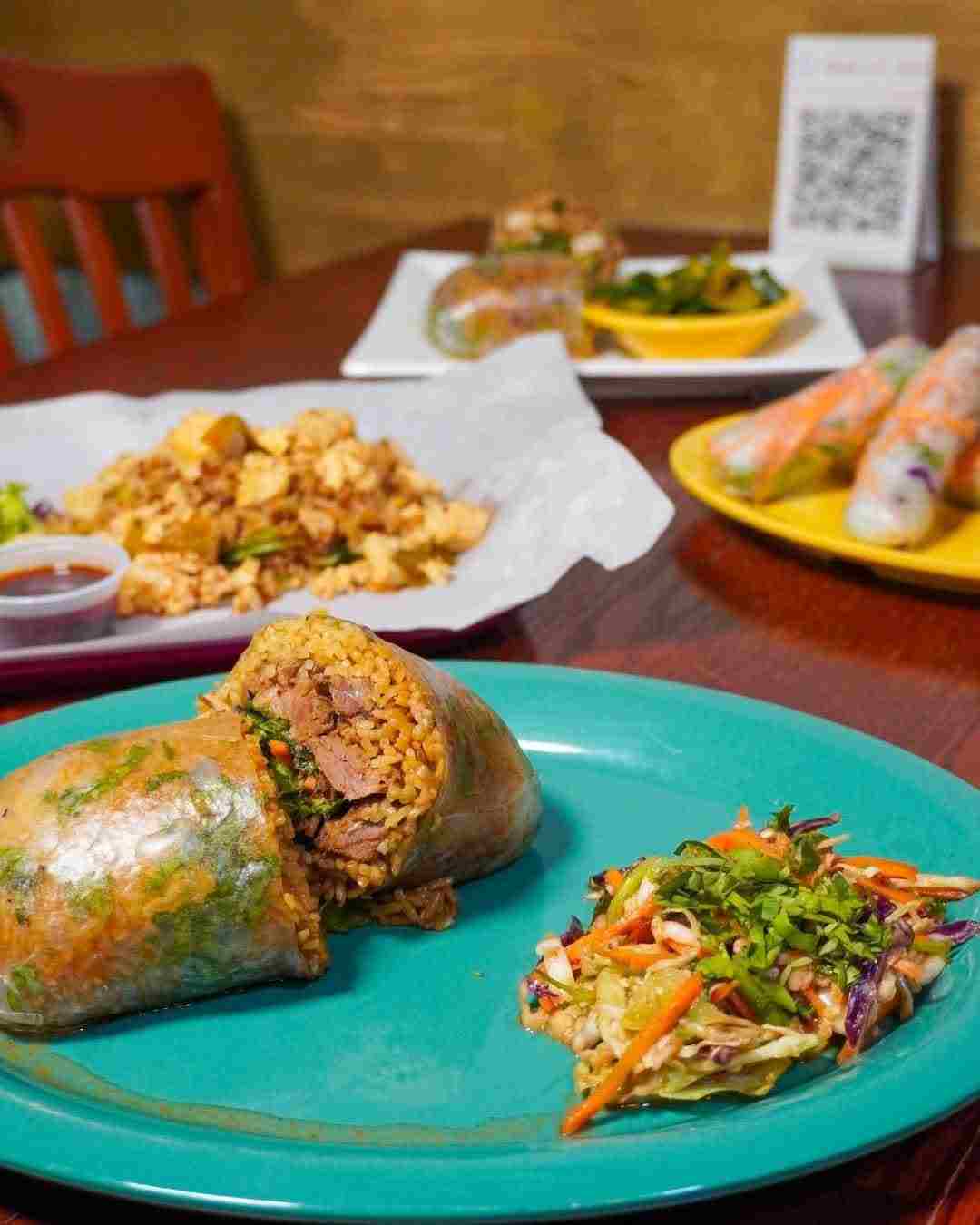
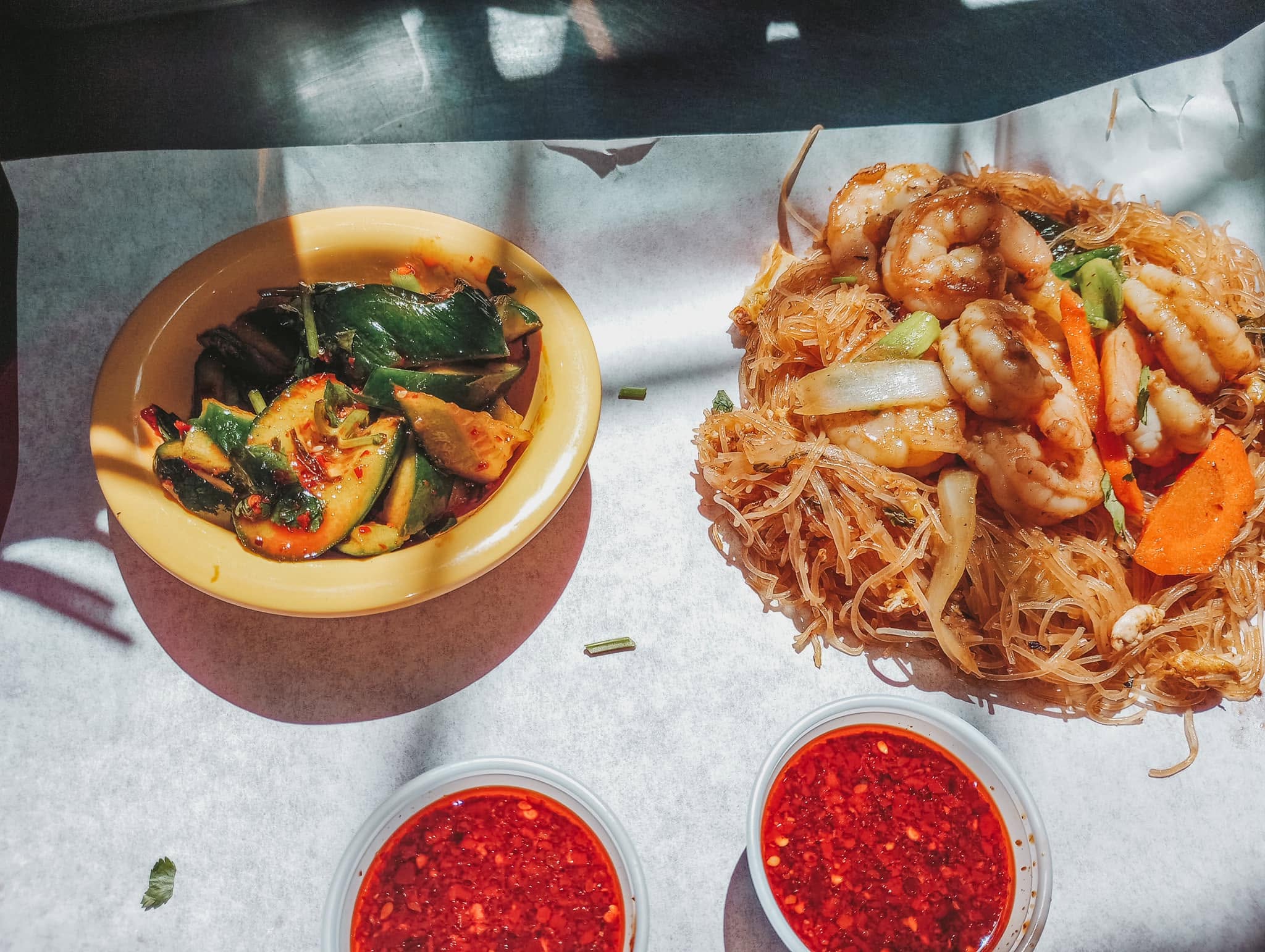
We’d describe what we do as fresh Asian cuisine with a soul-food flare, and whether you file that under fusion is up to you. What we can tell you is how it’s made. We use freshly chopped ingredients, no MSG, and we make our seasonings and sauces from scratch, from peeling the garlic to roasting the peanuts.
It started in 2008 as an experiment on a single gas grill at Soulard Farmers Market, where the stand is still open every Saturday lunch. These days there’s also our shop in Fox Park.
The best way to settle what is Asian fusion cuisine for yourself is to eat. Browse the menu, pick the Giant Rice Paper Wrap, and notice what’s on the plate and why. If you want to go deeper on how flavors get matched, our piece on Asian cuisine pairings is a good next read.
Frequently asked questions
Is Asian fusion food authentic?
It depends on what you mean. Fusion isn’t trying to reproduce a single regional dish, and the Resy essay notes ongoing questions about credit and who gets left out, so the more useful question is whether the cook is drawing on their own experience.
What’s the difference between Asian fusion and pan-Asian?
Asian fusion blends distinct cuisines, Asian with Asian or Asian with Western. Pan-Asian uses ingredients common across Asia, such as rice, so a rice bowl is the standard example.
Who invented fusion cuisine?
Nobody can claim it outright. Norman Van Aken is credited with the term in 1988, Richard Wing was blending French and Chinese cooking in California in the 1960s, and Wolfgang Puck’s Chinois on Main is often cited as a pioneer, a claim that’s disputed.
Is a California roll Asian fusion?
Most sources treat it as one. It was created in America in the later 20th century and adapts Japanese sushi to local tastes.
Sources
- Fusion cuisine — Wikipedia
- What Makes Fusion Successful? — Escoffier
- Is It Time We Stop Using The Term Asian Fusion? — Food Republic
- Turns Out Now Is the Golden Era for Fusion Cuisine — Resy